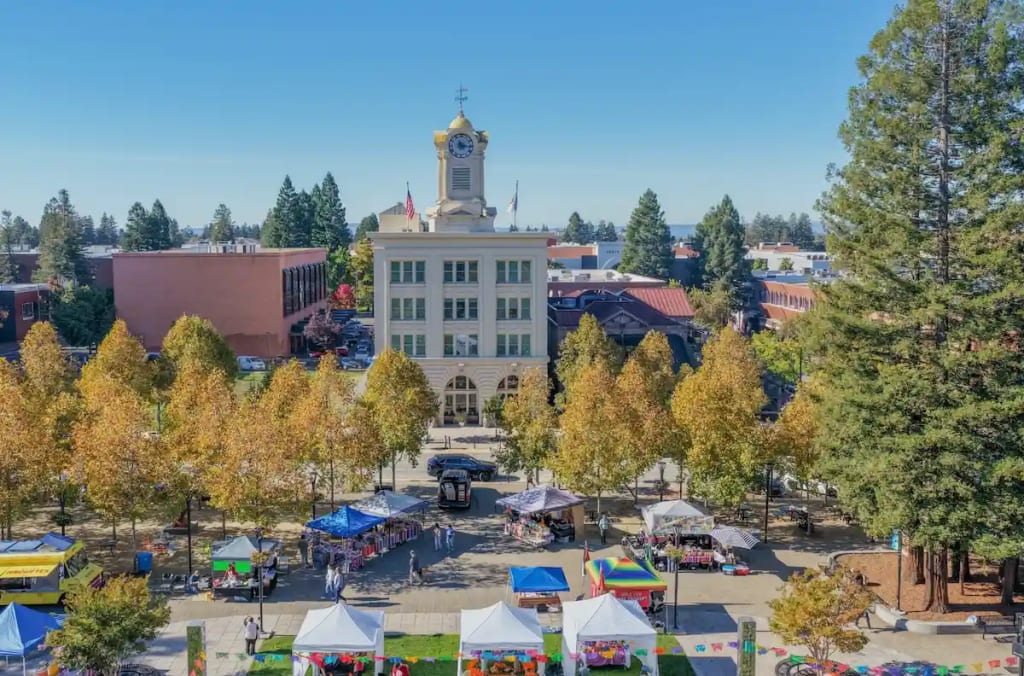
Santa Rosa is one of Sonoma County's most affordable places to buy a first home, with a median near $745,000 and many listings priced under $750,000 today.

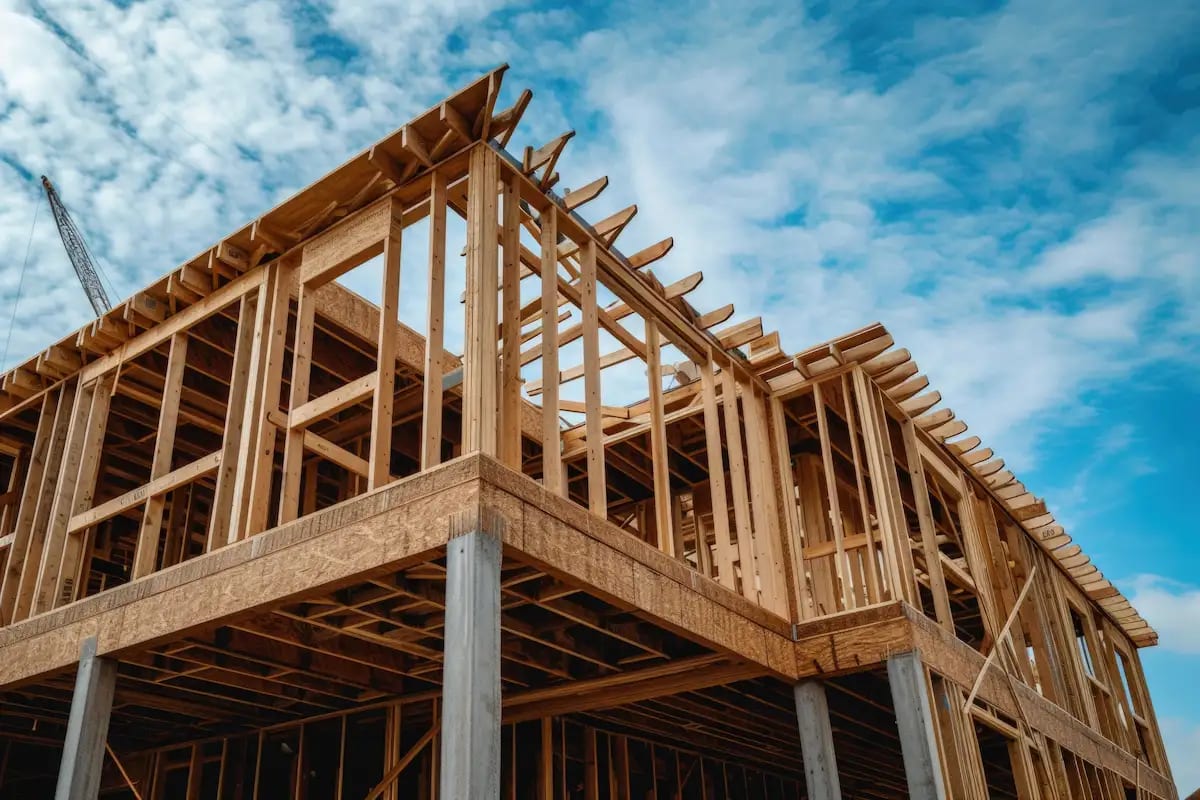
Building a 4,000 square foot custom home in Sonoma County costs roughly $2.4 to $4 million all in for 2026, or about $650 to $1,000 per square foot once you include soft costs, infrastructure, landscaping, and general contractor markup. The lot is on top of that. The good news is that build cost inflation has cooled compared to the brutal 2021 to 2023 stretch when costs jumped 30 percent. The bad news is tariffs have pushed metals up 30 to 40 percent year over year, so 2026 budgets need a 6 to 10 percent buffer over what the same project cost two years ago.
I last wrote this guide in 2022. Two years later, the math has shifted enough that anyone seriously thinking about building should reset expectations. So here is the full 2026 update, including the lot decisions that drive everything else, the 13 cost categories you will actually be writing checks for, and where the market is heading.
Lot selection is the single biggest decision in a build, and it is the one most people get wrong. Lot prices in Sonoma County range from $100,000 to over $3 million, and clients call me weekly about a "great deal" they have spotted at $200,000. As with most bargains, there is a reason. Below market lots usually come with one or more of the following: steep slope, no water, contaminated soil, an easement issue, or a permit problem the previous owner could not solve.
The rule I use with every client is the 25 percent rule. The cost of the lot should not be more than 25 percent of the value of the finished home. If you spend $1 million on the lot, the finished home needs to be worth at least $4 million. The reason is partly economic and partly practical. With build costs where they are, getting upside-down on a build is dangerously easy. Lenders also will not finance a project where the appraised end value is less than your land plus build cost.
Beyond the geography, here are the lot-level questions to ask before you write an offer.
Flat or Sloping?
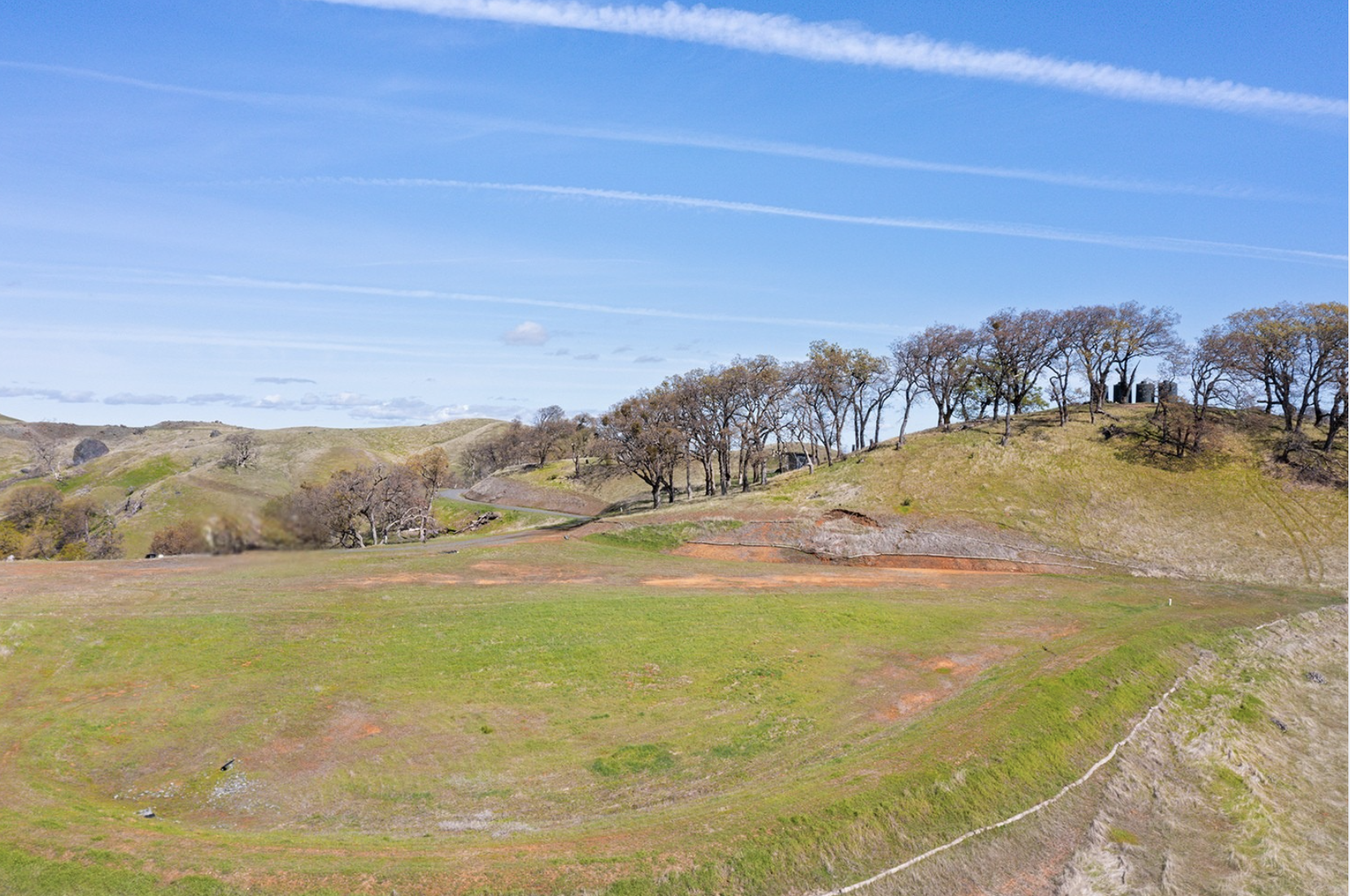
A steep lot can add $200,000 plus to grading, retaining walls, and foundation engineering before you have framed a wall. Flat lots build faster and cheaper. If you fall in love with a hillside, walk in with eyes open.
Sonoma County is full of burn lots from the Tubbs, Kincade, and Glass fires. Buyers often dismiss them, which is a mistake. Building on a burn lot has real advantages. The county waives impact fees as long as the rebuild does not increase square footage compared to the original home. Code requirements are slightly more relaxed, and there is no requirement to install solar on a like-for-like rebuild. Most importantly, the infrastructure is already there: driveway, well, septic, power. At $25 per linear foot for a new driveway and $130,000 plus for a new well and septic system, that infrastructure is worth real money.
If the city sewer is at the edge of the lot, hook-up is under $20,000 plus fees and a few weeks of work. Septic is a different animal. Septic Systems in Sonoma County can run $80,000 to $120,000 by the time you finish the soft costs, and on a difficult lot it can take a year to install, sometimes two. Before you buy a rural lot, you want a recent perc test on file and ideally a septic system design sized for the home you intend to build.
City water hook-up is straightforward, usually under $15,000 plus fees. Wells are the trickier path, and the regulatory landscape is in flux. Sonoma County has been through several rounds of well permitting changes since 2022, and as of 2026 the county is currently issuing permits for non-emergency wells under a court-ordered stay pending appeal. Anyone planning to drill needs to check current status the day they apply, because the situation has shifted multiple times.
If you drill, expect to spend $50,000 to $70,000 for a complete well: drilling, casing, pump, pressure tank, and the equipment. Sonoma County requires a minimum 1 gallon per minute for a residence, and an additional 1 gpm per accessory dwelling. The cost depends on how many holes you have to drill before you find water, and how deep the well goes. A good local well company can give you a realistic probability for any given parcel.
Most lots have power at the road. A typical connection plus temporary construction power runs $9,000 to $12,000. If the lot is set back several hundred yards, the cost climbs quickly. With current solar plus battery economics, full off-grid is now genuinely viable for remote builds, and in some cases cheaper than running a long power drop.
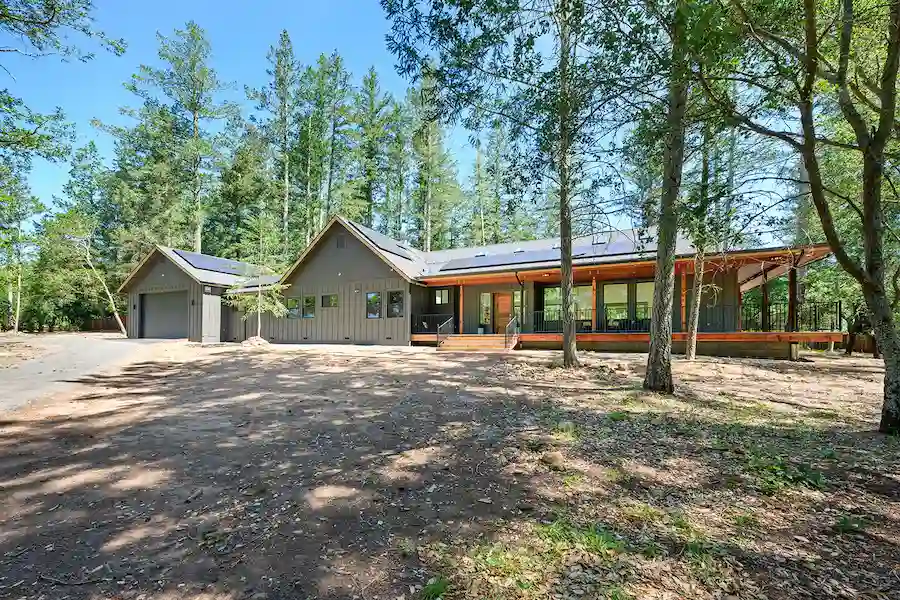
For the full breakdown I am using a real project: a 4,023 square foot home in Santa Rosa with 4 bedrooms, 4.5 baths, a 3-car garage, a pool, and an office, on a 1-acre lot. The lot was a burn lot purchased for $303,000, which kept infrastructure costs low. The numbers below reflect 2026 pricing for that build. If your project is on a clean rural lot without infrastructure, add $150,000 to $200,000 for utilities, septic, and well.
| Cost category | Typical cost |
|---|---|
| 1. Soft costs and fees (design, engineering, permits, impact fees) | ~$100,000 |
| 2. Infrastructure (utility connections) | $30,000 city lot / $150,000–$200,000 rural lot |
| 3. Site costs (grading, prep) | ~$80,000 flat clean lot (+$50,000–$80,000 if demolition needed) |
| 4. Landscaping, hardscaping and pool | $80,000 concrete; pool $250,000–$300,000 |
| 5. Building the structure (foundation, framing, roof, drywall, insulation) | ~$918,000 |
| 6. Windows and doors | ~$183,000 |
| 7. Plumbing | ~$139,000 |
| 8. Electrical | ~$65,000 |
| 9. Finishes | ~$200,000 |
| 10. Carpentry, cabinets and floors | ~$170,000 |
| 11. Painting | ~$40,000 |
| 12. Miscellaneous | ~$100,000 |
| 13. General contractor (overhead + profit, ~20% of subcontractor costs) | $400,000+ |
| All-in build (real 4,023 sq ft Santa Rosa example) | $2.895M build + $303K lot = $3.198M ($719/sq ft) |
Architect, draftsman, surveyor, structural and civil engineers, plus county or city fees. Architectural fees alone start at $50,000 for a home this size and can run much higher. I always recommend a flat fee or hourly arrangement with your architect, not a percentage of the build cost. Once you bundle in soft costs, plan on around $100,000.
On a burn lot with infrastructure in place, infrastructure costs are minimal. On a city lot with services at the curb, expect around $30,000. On a rural lot needing well and septic, costs run $150,000 to $200,000.
Grading, excavation, site clearing, lot development. On a flat clean lot, $80,000 covers it. Demolition of an existing structure adds $50,000 to $80,000. One trick: in some areas, the local fire department will burn down a tear-down for free as a training exercise, including cleanup. Worth a phone call.
This is where budgets blow up quietly. Concrete work alone is $80,000 for a home of this size. A pool with proper hardscaping, equipment, and outdoor kitchen runs close to $250,000 to $300,000 if the lot is anything other than perfectly flat. A simple deck adds $30,000 even with mid-range materials. Architects rarely include landscaping in the headline per-square-foot number, so always ask the question.
Foundation runs $150,000 to $200,000 depending on soil and slope. Framing the house adds $420,000. Trusses, shingle roof, gutters, siding, and exterior trim add another $150,000 to $200,000. Drywall is $70,000 and Title 24-compliant insulation is $28,000. Total to get the structure weatherproofed: $918,000.
A high-end window package for a 4,000 sq ft home runs around $75,000 to $125,000. The garage door adds $18,000. Interior and exterior doors add $40,000. Total around $183,000. Bi-fold sliders and pocketing door systems are popular with architects but expensive, and in my experience clients rarely use them once installed because of bug screening and operation.
Rough plumbing $60,000, HVAC $55,000, fire sprinklers $24,000. Sprinklers are mandatory on all new builds and on remodels above a certain scope. Total $139,000, before plumbing fixtures, which I roll into finishes.
Rough electrical for a home of this size is $65,000 in 2026, up roughly 15 percent from 2024 due to expanded EV charging requirements and Title 24 updates. Lighting fixtures live in finishes.
Where dreams meet budget. Plumbing fixtures $15,000, fireplace $15,000, door hardware $5,000, four bathrooms of shower enclosures and glass $40,000, bath tubs $4,000, tile and counter tops $45,000, appliance package $50,000, entry gate $25,000, plus closet hardware and other finishing items. Total around $200,000. This category has the most variance. You can spend $300,000 on a single kitchen if you let yourself.
Kitchen cabinetry $60,000 for mid-range. Closet cabinetry $10,000. Bathroom cabinetry $20,000. Engineered wood flooring $60,000. Door trim and baseboards $20,000. Total $170,000.
Easy to forget, easier to underestimate. Interior and exterior painting for a home this size runs $40,000.
Site fencing, security cameras, dumpster fees, tool theft replacement, the things you do not see coming. Set aside $100,000 for a build of this size. You will use it. A lot of people will want to build a pool which we haven't itemised in here but in this blog post we outline how much it costs to build a pool
Most contractors charge a 10 percent overhead markup on subcontractors plus 10 percent profit. For a build of this size, that is $400,000 plus. The number surprises a lot of first-time builders, but a good general contractor manages a half-dozen trades, the inspection process, and the schedule. They earn it.
For the 4,023 square foot home in this example, the all-in build cost is $2.895 million. That works out to $719 per square foot, including everything: soft costs, infrastructure, pool, landscaping, finishes, and contractor markup. The lot was $303,000, taking the total cost to roughly $3.198 million. Comparable finished homes in that part of Santa Rosa are selling around $2.5 to $3.5 million in spring 2026.
Three things to know about that math. First, this is a mid-range build. If you walk into a kitchen showroom and write a $200,000 cabinetry check, the per-square-foot number jumps fast. Second, the example uses a burn lot. Build the same house on a clean rural lot and the all-in cost moves closer to $3.2 to $3.5 million. Third, materials inflation has cooled but tariffs have repriced metals significantly. Copper is up 30 to 40 percent year-over-year, steel is volatile in a 15 to 25 percent band, and lumber duties from Canada could push framing costs another 25 percent if they fully take effect. Lumber and concrete have actually softened, which partially offsets the metals story, but anyone budgeting in 2026 should add a 5 to 10 percent contingency over what the same project would have cost in early 2024.
A 2,000 to 2,500 square foot home will not scale linearly. Soft costs, contractor overhead, and the kitchen do not shrink in proportion to square footage, so smaller homes typically run $800 to $1,200 per square foot. A lot of people often want to build an ADU which for many people building an ADU makes perfect sense. It is worth noting that ADUs and guest houses have their own cost structure and their own regulatory framework, which we covered in our ADU and guest house requirements guide. Spec builders and developers building multiple units at once can usually get costs into the $450 to $600 per square foot range by standardizing finishes, sharing crews, and buying materials in bulk.
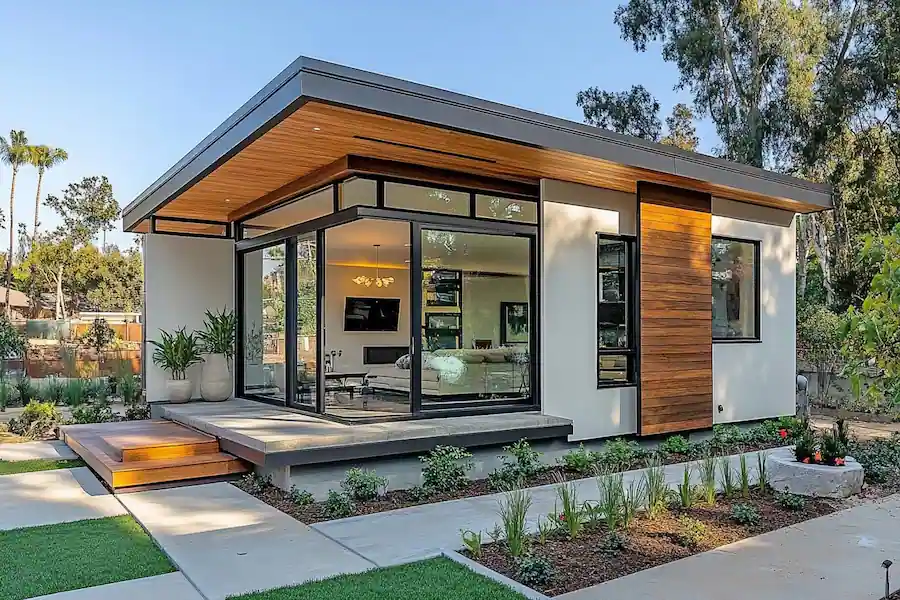
If the goal is a vacation rental, the build cost is only one piece of the picture. STR permits, transient occupancy zoning, and operational economics all matter as much as construction cost. Anyone considering a build for short-term rental should first understand Sonoma County's vacation rental rules, because the wrong zone makes the math impossible regardless of build cost.
The honest answer is that building in Sonoma County rarely creates dollar-for-dollar value compared to buying. The example home above cost $2.9 million all in and is worth about that on the open market. Where building wins is when you build your dream home, in the right location, at a level of finish you would not find on the market, and you plan to live there long enough to enjoy it. Where it loses is when the location is wrong, the design overshoots the neighborhood comp, or the finishes run away from the budget. One option many people are starting to explore as building costs continue to increase is building a pre-fab home. The costs are cheaper but maybe not by as much as you think
I made the first mistake on my own build. I picked a location that I no longer wanted to live in long-term, and the design was over-built for that area. Knowing what I know now, I am still looking for a lot, this time in downtown Healdsburg, to build the home I actually want to live in.
Custom builds run roughly $650 to $1,000 per square foot all in, depending on lot conditions, finishes, and whether you are on city services or rural infrastructure. Spec builders and developers can get costs into the $450 to $600 per square foot range by standardizing finishes and buying materials in bulk. Smaller homes under 2,500 sq ft typically run higher per square foot because soft costs and the kitchen do not scale down with square footage.
Plan on 18 to 30 months from purchasing the lot to moving in. Architecture and engineering take 4 to 8 months. Permitting through Permit Sonoma or your city's building department adds another 3 to 9 months depending on jurisdiction and project complexity. Construction itself runs 12 to 18 months for a custom home of this size. Rural lots needing a new well or septic can add 6 to 12 months on top of all that.
Buying is almost always cheaper on a dollar-for-dollar basis. The example 4,023 sq ft Santa Rosa build in this guide came in at $3.2 million all in including the lot, and a comparable finished home in the same area sells in the $2.5 to $3.5 million range. Building wins when you want a specific design, location, or level of finish that the market does not offer, or when you plan to live in the home long enough that the dream-home premium is worth it.
Yes. Every new residential build requires a building permit through Permit Sonoma (for unincorporated county) or your city's building department (Healdsburg, Windsor, Santa Rosa, etc.). Permit fees and impact fees are typically captured in the $100,000 soft cost figure for a build of this size. Rebuilds on burn lots get impact fee waivers from the county as long as the rebuild does not exceed the original square footage.
As of 2026, Sonoma County is currently issuing permits for non-emergency wells under a court-ordered stay pending appeal. The status has shifted multiple times since 2022, so anyone planning a rural build that requires a new well should check current status with Permit Sonoma the day they apply. Existing wells on burn lots and previously permitted parcels are not affected.
Two categories consistently dominate. The structure itself (foundation, framing, roof, drywall, insulation) runs around $918,000 for a 4,000 sq ft home, roughly a third of the build budget. The general contractor's overhead and profit at 20 percent of subcontractor costs adds another $400,000 plus. Together those two categories represent close to half the all-in cost. Finishes are where most people lose control of the budget, even though they are not the largest line item.
Only in zones that permit short-term rentals, and only with the appropriate vacation rental permit and business license. The wrong zoning makes a vacation rental impossible regardless of how the build pencils, so verify zoning and the current STR ordinance before you buy a lot or break ground. Vacation rental rules in Sonoma County have changed several times since 2021, so do not rely on what was true two years ago.
Have questions about the cost of building in Sonoma County, or want a second opinion on a lot you are looking at? Reach out at bruingtonhargreaves.com or book a free consultation. Happy to walk through the real numbers on your specific project.
Building in Sonoma County offers a unique opportunity to create your perfect wine country lifestyle. Whether you envision entertaining friends on a vineyard-view terrace or finding solitude among heritage oaks, the path to realizing this dream requires careful navigation. This guide, based on real experiences and 2024 market conditions, will help you avoid common pitfalls while making informed decisions throughout your building journey.
We have lots of additional content on our blog and YouTube channel about buying a lot, designing a home and building a home.
Sign in with your email address
Enter your email address