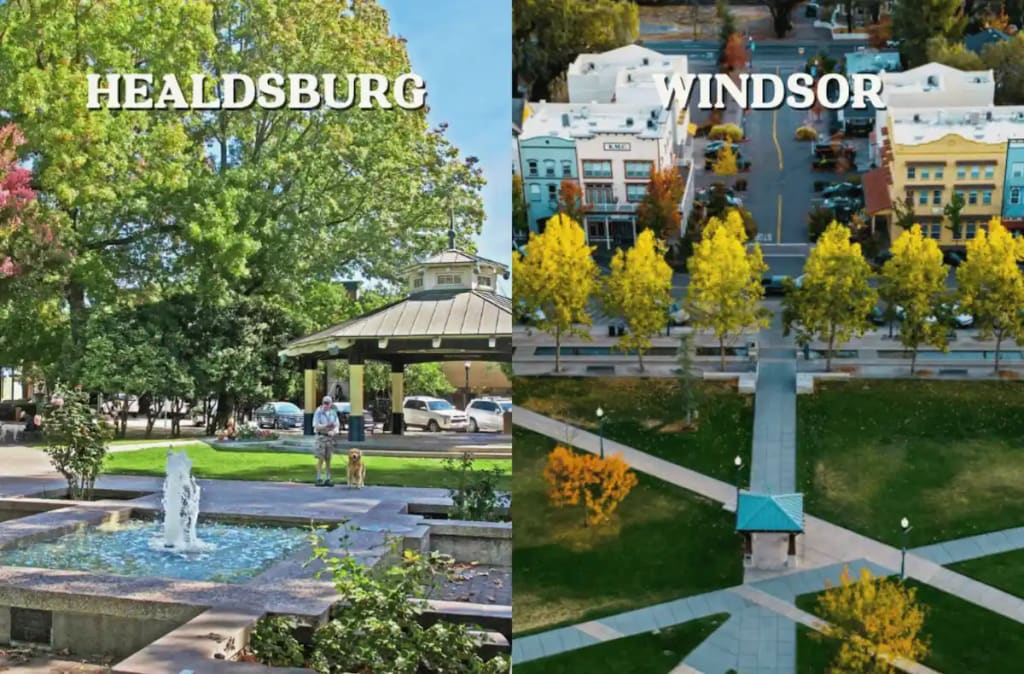
Just 8 minutes apart but worlds different. Compare Healdsburg and Windsor on price, schools, lifestyle, and wine country access. Find your fit.

If you've been watching Sonoma County real estate from your home in San Francisco or Marin, contemplating that wine country move you've been discussing for years, you've probably seen the headlines about 2025's "modest 3.2% sales growth" and thought it sounded reassuring but unremarkable. The reality beneath those numbers tells a far more compelling story about what's actually happening in wine country real estate.
After analyzing the full-year data, what emerges isn't a single market trending in one direction. Instead, we're seeing three completely separate ecosystems operating simultaneously within our county borders, each responding to different forces, different buyers, and different market realities. Understanding which market you're operating in—and its unique personality—has never been more critical for making smart real estate decisions here.
Let me break down what's really happening in each of these three markets and what it means for your specific situation, whether you're a first-time buyer, a Bay Area downsizer, or someone considering a luxury wine country estate.

Think of Sonoma County's 2025 real estate market as three siblings raised in the same household who turned out completely different. They share the same address and family name, but their life trajectories couldn't be more distinct. Each has its own personality, its own opportunities, and its own challenges.
I call this segment "The Reliable Engine That Finally Took a Breath," and here's why. For years, this has been the dependable workhorse of Sonoma County real estate—the market where most residents actually live, where teachers and nurses and local business owners buy their homes. In 2024, this segment was running so hot that buyers were making offers sight-unseen, waiving contingencies left and right, and facing disappointment after disappointment in multiple-offer situations.
2025 changed everything.
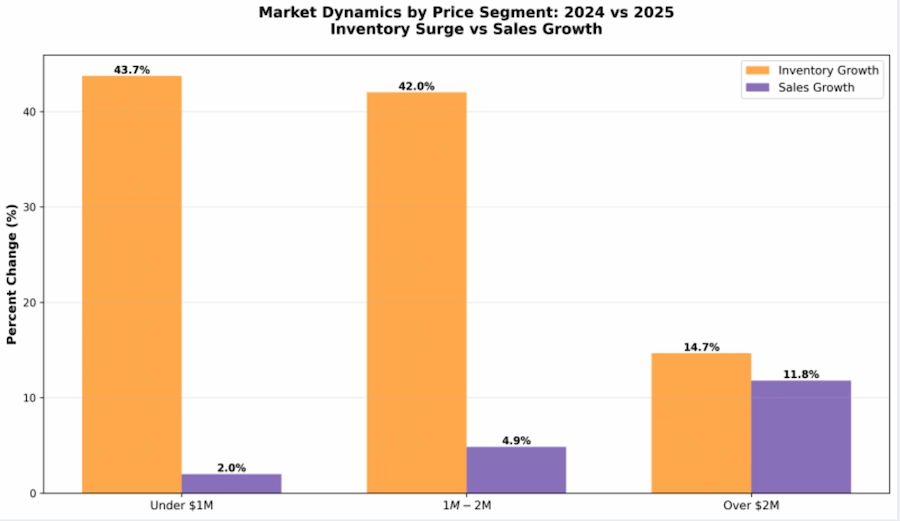
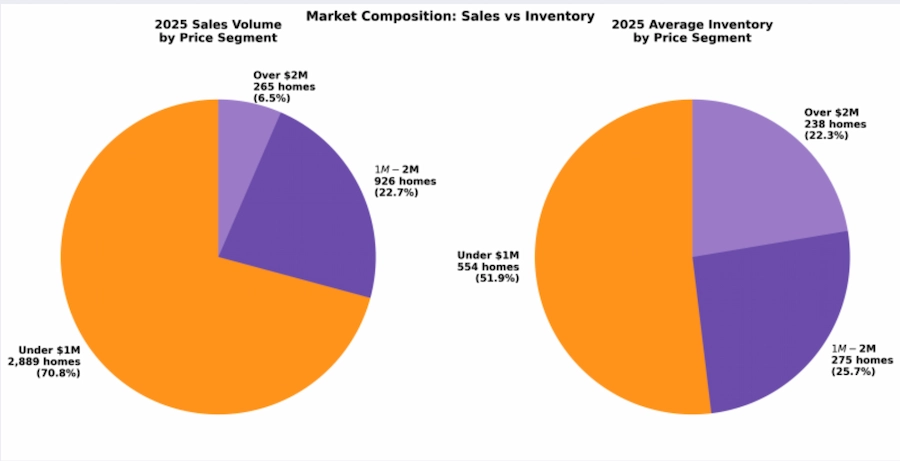
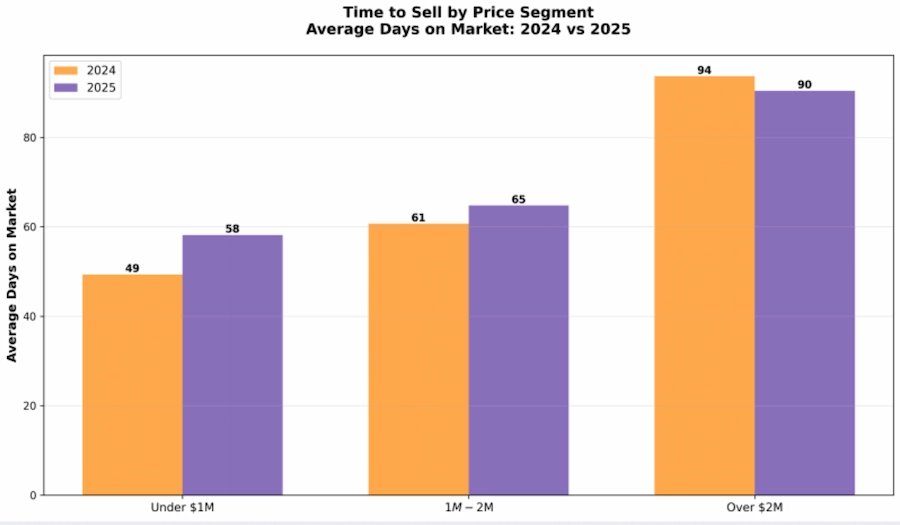
Inventory in this segment surged 44%—the most dramatic increase across any price range. Suddenly, there were 554 homes available on average instead of 385. The absorption rate plummeted 28%, dropping from 62.4% to 44.7%. Properties that used to sell in 49 days were taking 58 days.
Here's what that actually looks like on the ground: If you're a Bay Area professional looking at homes in Windsor or western Santa Rosa in the $700K-$900K range, you now have breathing room. In 2024, you'd walk into an open house with 15 other families and need your offer in by Monday morning, probably over asking with minimal contingencies. In 2025, you might be one of five serious buyers with time to do proper inspections and actually think about your decision without that pressure cooker environment. And if you are a Windsor owner watching from the other side, it is worth knowing where Windsor home values sit before you list.
That being said, despite this dramatic inventory surge, median prices held remarkably steady—down just 0.7% to $708K. This isn't a market collapse by any stretch. It's a market exhaling after holding its breath for too long. Sales still grew 2%, proving that underlying demand remains healthy. This segment simply shifted from an extreme seller's market to a moderate seller's market—still favoring sellers, but no longer at panic-inducing levels.
What this means for you: If you've been priced out or exhausted by the competition in recent years, this is your window. You're buying at essentially 2024 prices but with 44% more inventory to choose from and significantly less pressure. That being said, don't mistake "less frenzied" for "easy"—quality properties in good school districts or walkable neighborhoods still move within two months. This segment represents 71% of all sales, meaning it's liquid and supported by genuine housing need rather than speculative demand. When life circumstances change, you'll be able to exit this market.
This is where Sonoma County gets really interesting. I think of this as "The Sophisticated Sweet Spot" because it encompasses everything from updated homes in desirable Sebastopol neighborhoods to ranch properties with vineyard views, and it's where buyers who've done well financially come to invest in both lifestyle and appreciation.
This segment matched the under-$1M inventory surge with a 42% increase. Logic would suggest prices should have softened like they did in the affordable segment. Instead, prices actually appreciated 1.9% to $1.298M.
Even more remarkably, while properties under $1M took 18% longer to sell, homes in this middle segment saw only a 6.7% increase in days on market—the smallest increase of any segment. And while other segments saw sellers pull back, this tier experienced the strongest new listing growth at 8.2%, suggesting confident sellers were bringing properties to market and finding willing buyers.
This is the market segment that best navigated 2025's shifts. The 42% inventory increase provided choice without crushing prices. The 4.9% sales growth showed strong demand. And the price appreciation revealed that quality commands a premium even in a normalizing market.
Consider what this actually means on the ground: A well-maintained home in Healdsburg's city limits, a renovated farmhouse in Sebastopol with modern systems, or a newer construction home in Windsor's desirable neighborhoods all found eager buyers willing to pay more than 2024 prices. The market rewarded sellers who invested in quality and priced thoughtfully, while punishing those who overreached or brought dated properties expecting top dollar.
What this means for you: Whether you're a San Francisco couple looking to escape the city while maintaining remote work flexibility, or established Sonoma County residents looking to upgrade as your equity grows, this segment offers the healthiest balance of supply and demand. Expect to pay around 95% of asking price, plan for about 65 days from listing to close, and know that well-positioned properties still attract multiple competitive offers. This is where the "wine country lifestyle investment" thesis works best—you get appreciation potential along with the quality of life upgrade that likely motivated your search in the first place.
Here's where the 2025 story gets counterintuitive. I call this "The Patient Perfectionist Who Finally Made a Move" because the dynamics here challenge conventional market wisdom. The luxury segment carries an oversupply that would terrify most sellers—11.5 months of inventory, meaning nearly a year's worth of homes sitting on the market at any given time. Median prices fell 7.2%, a significant correction from $2.916M to $2.707M.
Yet this segment showed the strongest sales growth of all three tiers—up 11.8%. And properties actually sold faster than they did in 2024, with days on market decreasing 3.5%.
How does a market with falling prices and massive oversupply sell more homes, faster? The answer reveals something fundamental about luxury buyers that I've learned working with them for over a decade: they're not desperate, but they are decisive when value aligns with reality.
The 7.2% price correction brought properties down from 2024's inflated expectations to levels where buyers said "yes, that makes sense for what I'm getting." A well-priced luxury home—perhaps a contemporary estate in Dry Creek Valley listed at $2.4M instead of the $2.7M the seller hoped for—found buyers quickly because the repricing was real, not just cosmetic adjustments while sellers hoped for that one perfect buyer who'd pay their dream price.
The luxury market underwent what economists call "price discovery"—that uncomfortable but necessary process where sellers' expectations and buyers' willingness finally meet in the middle. Those who embraced this reality sold their properties. Those who didn't became part of the 11.5 months of accumulated inventory.
What this means for you: If you're considering a luxury wine country property—perhaps as your eventual retirement home, or as that "lifestyle investment with rental income potential" you've been exploring—2025's repricing created the first genuine buying opportunity in years. If you are looking at income properties it is worth knowing before you commit if the property would be eligible: not every Sonoma County property qualifies as a vacation rental — county and city rules vary significantly. Our list of vacation-rental-eligible properties for sale shows what's actually permitted.
When thinking about offers budget for around 90% of the original asking price (sellers in this segment typically start 10% too high), expect properties to take about 90 days to close, and focus on motivated sellers who have already accepted market reality rather than those still testing whether they can get 2024 prices.
The recent Los Angeles fires have likely put additional pressure on this segment, both from potential buyers evacuating Southern California and from sellers realizing fire insurance complexity affects pricing across all of California wine country. This could create additional opportunities for well-capitalized buyers who can move decisively when they find the right property.
Understanding why these three segments performed so differently requires looking at who's actually buying in each tier and what motivates them.
The under-$1M market is driven primarily by local buyers, first-time purchasers, and those needing to finance with mortgages. When inventory surges 44%, these buyers—many operating at the edge of their budget—gain negotiating leverage. The slight price softening reflects their increased power, while the stable overall pricing shows the segment is supported by genuine housing need rather than speculative demand. These are people who need a place to live, not investors timing the market.
The $1M-$2M segment attracts a fundamentally different buyer: successful professionals often relocating from the Bay Area with substantial equity from sold homes, empty nesters upgrading with decades of accumulated wealth, and those seeking "lifestyle properties" where the home itself is part of the investment thesis. These buyers have more flexibility and are willing to pay premiums for quality, modern systems, desirable locations, and properties that don't require immediate work. The 1.9% appreciation despite 42% inventory growth proves that in this tier, differentiation matters more than simple availability.
The luxury market over $2M operates almost entirely on discretionary timelines. These buyers don't need to buy—they choose to buy when everything aligns. Many are purchasing second homes or investment properties, often with cash. In Healdsburg, for example, 48% of purchases were all-cash transactions—one of the highest rates in the county. If you own here and are weighing your options, it helps to understand what selling your Healdsburg home looks like in this market. The 2024 market priced many of them out with unrealistic seller expectations. The 2025 correction brought them back. The 11.8% sales growth represents these buyers saying "now the price makes sense for what I'm getting."
Let me translate this into the real-life situations I see constantly among wine country buyers and sellers. Your circumstances determine which market dynamics matter most.
The Entry-Level Buyer: You're finally ready to stop renting and build equity. Maybe you're a young family needing more space, or a professional who's saved enough for a down payment. You've been watching the market for years, constantly outbid or priced out, wondering if homeownership in Sonoma County would ever be possible.
The 2025 market created your best opportunity in years. The 44% inventory surge in the under-$1M segment means you're no longer competing against 15 other offers on every property. You have time to get proper inspections, think through your decision, and avoid waiving contingencies out of desperation. Prices held steady (down just 0.7%), so you're not trying to catch a falling knife—you're buying at fair value with significantly less stress.
Target homes in Windsor, western Santa Rosa, or parts of Sebastopol and Petaluma. Budget for around 97% of asking price, get pre-approved with a strong local lender who understands wine country, and move decisively when you find the right property. Quality homes in good school districts still sell within 60 days, but you'll have breathing room you didn't have in 2024.
The Bay Area Downsizers: You're in your late 50s or early 60s, the kids are launched, and you're tired of Bay Area traffic, expense, and the fast pace. Your $2.5M home in San Francisco or Marin could sell for a comparable wine country property, giving you cash to invest plus a genuine lifestyle upgrade—more space, better climate, proximity to wineries and nature.
The $1M-$2M segment is calling your name. Inventory increased 42%, giving you meaningful choice, but quality still commands prices that actually appreciated 1.9% in 2025. You have negotiating leverage and more options than you did in 2024, but don't expect desperate sellers throwing in everything. Target around 95% of asking price, take your time finding the right property, and know that well-positioned homes in Healdsburg, Sebastopol, or Sonoma still attract competition. The fact that this segment appreciated during a normalizing year suggests your investment thesis around lifestyle AND value creation holds up.
The Luxury Lifestyle Investor: You've done well financially and want a wine country estate—something special that combines investment potential with genuine lifestyle enhancement. Maybe rental income through vacation rental platforms matters to your financial model, maybe it doesn't, but you want appreciation potential while enjoying the property yourself.
The luxury market correction is your opportunity. The 7.2% price decline brought properties down to realistic levels, and the 11.8% sales growth proves properly-priced homes are transacting. That being said, the 11.5 months of inventory means you have significant leverage—budget around 90% of asking, take your time finding the perfect property, and be prepared for the complexity of insuring high-value rural properties in fire-prone areas. The market rewards patient, well-capitalized buyers in this segment who know what they want and can move when they find it.
The Local Trading Up: You're established in Sonoma County, have built equity in a starter home, and want to upgrade while staying local—bigger yard for the kids, better schools, closer to town amenities, or simply more space as your family or needs have grown.
You're operating in the crossover between under-$1M and $1M-$2M, which gives you interesting options. Your current home likely held value well (under-$1M prices down just 0.7%), so your equity is intact for your next purchase. The destination market ($1M-$2M) showed the healthiest dynamics—modest inventory increase, minimal days-on-market growth, and slight price appreciation. You're trading from a stable market into an appreciating one, which is ideal timing. That being said, you'll need to price your current home realistically given the 44% inventory increase in the affordable segment—competition has increased for buyers in your price range.
For many of you reading this from the Bay Area or beyond, the fundamental question isn't just "what are the market stats?" but rather "does investing in Sonoma County real estate still make sense as part of my wealth strategy and lifestyle goals?"
The 2025 data actually strengthens the case, but with important nuances I want you to understand before making a decision.
The diversification argument holds strongly. Real estate remains a proven hedge against stock market volatility and inflation. The under-$1M segment's 0.7% price stability despite 44% inventory growth shows underlying value support from genuine housing demand. The $1M-$2M segment's 1.9% appreciation during a rebalancing year proves quality assets hold value. Unlike some coastal markets that saw double-digit declines in 2025, Sonoma County demonstrated remarkable resilience.
The lifestyle dividend is genuinely real, though harder to quantify. The "investment" isn't purely financial in this market. Whether you're contemplating eventual retirement here, building a second-home portfolio, or securing a foothold in wine country for your family's future, the lifestyle benefits—community connection, environmental beauty, slower pace, proximity to world-class wineries and restaurants—represent returns that don't show up on a balance sheet but meaningfully improve your quality of life. In my decade of conversations with buyers, those who anchor their decision purely on cap rates and appreciation often overlook the significant value of simply enjoying the property while it appreciates.
The supply constraints remain structural and long-term. Even with 2025's 35.6% inventory increase, we're talking about 3.1 months of supply overall—still below the 6-month threshold for a "balanced market." The under-$1M segment hit just 2.3 months, the $1M-$2M segment reached 3.6 months. Only the luxury tier exceeded balanced market levels at 11.5 months. The fundamental supply-demand dynamics that have supported wine country pricing—limited buildable land, strict zoning regulations, environmental constraints, agricultural preserve protections—haven't changed and won't change given our community values around preserving wine country character.
The generational wealth transfer factor matters more than most realize. Many of my clients are thinking beyond their own use. They're acquiring properties their adult children might eventually inherit or occupy, effectively transferring wealth while securing a family gathering place. Sonoma County properties serve both functions exceptionally well—they're financial assets that can appreciate and provide rental income, while also being family legacy builders. The estate planning benefits, combined with potential 1031 exchange opportunities for investors, make these properties tools for generational wealth building rather than just personal use assets.
I'm always cautious about predictions—2024's dramatic inventory surge was largely unforeseen—but several factors will likely influence what we see this year.
Interest rate dynamics remain the wild card. If rates decline meaningfully (and that's a significant if given current economic conditions), the under-$1M segment could see renewed competition as more buyers qualify for financing. The luxury market, dominated by cash buyers, would be less affected by rate changes but might see additional investor activity if bond yields become less attractive compared to real estate returns.
The Los Angeles fire aftermath created a pool of displaced luxury buyers and increased awareness of fire and insurance challenges across California. This could benefit Sonoma County in complex ways—attracting relocated buyers who now view wine country as safer or more desirable than Southern California, while simultaneously making some properties harder or more expensive to insure. Expect this to particularly impact the luxury segment where insurance costs meaningfully affect carrying costs and buyer calculations.
Bay Area employment trends will directly impact our buyer pool since many Sonoma County buyers are current or former tech workers with Bay Area equity. Strong tech employment supports both the $1M-$2M segment (relocating workers maintaining remote arrangements) and the luxury market (cashed-out tech executives seeking lifestyle properties). Any significant tech industry contraction would reduce buyer flow.
The 1031 exchange factor could become more prominent. With commercial real estate uncertainty in many markets—office vacancies, retail challenges, apartment overbuilding in some regions—investors seeking 1031 exchange opportunities may increasingly look at residential wine country properties, particularly those with rental potential or vineyard income. This could support the $1M-$2M and luxury segments where properties can generate income while appreciating.
If there's one takeaway from 2025's data, it's this: Sonoma County is no longer one market with one strategy. You must understand which of the three markets you're operating in and adapt your approach accordingly.
Under $1M - The Volume Play. Expect stable pricing, meaningful inventory, real competition but not the hysteria of recent years. This segment is supported by fundamental housing demand from people who actually need to live here. Your strategy: Be prepared with strong pre-approval, move decisively on quality properties, budget around 97% of asking price, and don't try to time the market—buy when you find the right property. This segment represents 71% of all sales, meaning it's liquid and you can exit when life circumstances change.
$1M to $2M - The Quality Premium. Expect modest appreciation, expanding inventory, but continued rewards for quality and proper positioning. This is the sophisticated buyer's market where differentiation matters more than simply being available. Your strategy: Focus on properties with genuine lifestyle appeal—walkability to town centers, vineyard or valley views, modern systems that won't require immediate expensive updates, quality outdoor spaces. Budget around 95% of asking price and recognize that this segment's 1.9% appreciation during a rebalancing year signals underlying strength and buyer willingness to pay for the right property.
Over $2M - The Value Opportunity. Expect continued oversupply in the aggregate, but active transactions for realistic pricing and motivated sellers. This is where patient, well-capitalized buyers find opportunities that didn't exist when sellers had inflated expectations. Your strategy: Budget around 90% of original asking (not current asking after sellers have already reduced), focus on motivated sellers who've already accepted market reality, understand insurance and carrying costs before you commit, and recognize that the 11.8% sales growth proves the market is clearing efficiently at the right prices.
For those of you watching from San Francisco, San Jose, Marin, or beyond—contemplating that wine country move you've discussed for years around dinner tables and on weekend visits to wineries—the 2025 market offers something we haven't seen in quite some time: actual choice, reasonable timelines, and the ability to be thoughtful rather than frantic. Take a look at our Guide To Moving to Sonoma County
Whether you're seeking a lifestyle upgrade from urban intensity, a portfolio diversification that also provides personal enjoyment, a family legacy property that can be passed to the next generation, or simply a better place to spend your post-career years, Sonoma County's three distinct markets offer opportunities at different price points with different risk-reward profiles.
The market has normalized, not collapsed. Inventory has expanded, not exploded. Prices have held remarkably well, not plummeted despite significant supply increases. And for buyers who have felt perpetually locked out by competition and constraints, these three markets—each with its own personality and possibilities—represent the most accessible entry points we've seen in years.
The question isn't whether Sonoma County real estate makes sense for your situation. The question is: which of these three markets aligns with your goals, resources, and timeline? Answer that honestly, and you'll know exactly how to navigate wine country real estate in 2026.
If you'd like to discuss your specific situation and which of these three markets makes the most sense for your goals, I'd be happy to talk through the opportunities and challenges. You can reach me at contact@bruingtonhargreaves.com.
Video: Moving to Sonoma County
The Sonoma Life: A New Chapter of Living in Wine Country
Imagine leaving behind the constant buzz of city life for a place where the pace slows down just enough to appreciate life's finer moments. Where morning fog gives way to sun-drenched afternoons, and your evening commute might involve a scenic drive past rolling vineyards instead of gridlocked highways. This is the reality for those who choose to make Sonoma County their home.
For the first time since 2020, California is experiencing a net positive migration, with Sonoma County emerging as a particularly attractive destination. The reasons are as diverse as the landscape itself – from the dramatic Pacific coastline to the inland valleys dotted with world-class wineries.
Sign in with your email address
Enter your email address