
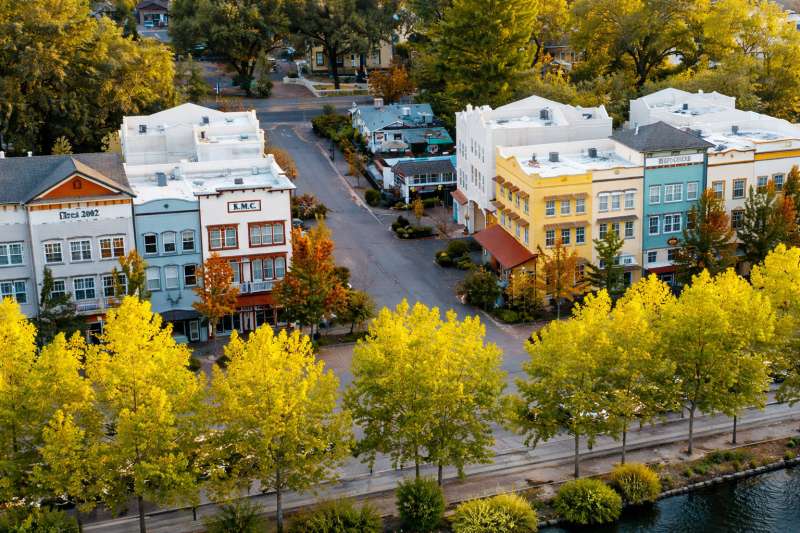
The median home sale price in Windsor, CA sits around $825,000 as of mid-2026. That number gets a lot of attention, but it's only part of what you'll actually need at the closing table. First-time home buyers in Windsor often overlook these additional costs. Before you wire a single dollar, you need to know what's waiting for you beyond the down payment.
Closing costs are the upfront fees that finalize a real estate purchase - separate from your down payment, and paid directly to lenders, title companies, and local government offices. The sooner you understand what they cover and who pays them, the fewer surprises you'll face.
What Are Closing Costs in California?
Closing costs cover the administrative, legal, and financial fees required to transfer property ownership. They're distinct from your down payment and flow to third parties: lenders, title companies, local government offices.
Both the buyer and seller pay a share of these costs in a typical transaction. How that split shakes out depends on state law, county custom, and what you negotiate in your purchase agreement - and those three things don't always point in the same direction.
Closing Costs vs. Down Payment
Your down payment reduces your loan amount. Closing costs are the service fees and taxes required to process that loan and legally transfer the deed. They're two completely separate buckets.
Lenders don't automatically roll closing costs into your mortgage. Plan to pay them out of pocket via wire transfer or cashier's check on closing day.
Buyer vs. Seller Closing Costs
Buyers generally cover the fees tied to securing a mortgage, getting the property appraised, and funding initial escrow accounts. Sellers typically handle agent commissions and the taxes required to transfer the property.
In California, seller closing costs average around 6% to 10% of the sale price when you include agent commissions. Strip the commissions out, and seller fees drop to roughly 2.7%.
How Much Are Buyer Closing Costs in Windsor?
Buyer closing costs in California typically run between 2% and 5% of the purchase price. Exclude prepaid property taxes and insurance, and that range can narrow to around 1.5% to 5%.
Applied to Windsor's current median of approximately $825,000, you're looking at roughly $16,500 to $41,250. Your exact number depends on your loan type, your lender's fee structure, and the time of year you close.
Is the Three Percent Rule Accurate?
It's a starting point, not a promise. Fees vary with the specifics of the deal - a buyer putting down 20% on a conventional loan may see lower proportional costs than someone using a low-down-payment program with upfront mortgage insurance premiums.
Even timing matters. Closing late in the month reduces the prepaid daily interest you owe before your first official mortgage payment.
Factoring in Sonoma County Fees
Where you're buying shapes your closing statement. In Sonoma County and the broader Santa Rosa metro area, local custom has buyers paying for both the owner's and lender's title insurance policies. That's different from Southern California, where sellers often pick up the owner's policy - so don't assume what a friend paid in San Diego will match what you'll pay here.
Closing Cost Estimates by Home Price
Your out-of-pocket estimate starts with your target purchase price. Individual lender fees vary, but the standard 2% to 5% range gives you a reliable baseline.
Many of the biggest line items - origination fees, title insurance premiums, prepaid property taxes - scale with the home's value, so higher purchase prices mean higher costs. That's not a surprise, but it's worth building into your planning early.
Sample Buyer Costs from $100,000 to $600,000
On a $100,000 property, buyers pay about $2,000 to $5,000. That scales to $4,000 to $10,000 for a $200,000 home, and $6,000 to $15,000 on a $300,000 purchase. A $400,000 home puts you in the $8,000 to $20,000 range.
At $500,000, anticipate between $10,000 and $25,000 - though some sources cite a narrower $10,000 to $15,000 range. A $600,000 purchase typically runs $12,000 to $30,000 in buyer fees.
Calculating Your Specific Costs
The most reliable number you'll get before closing day comes from your Loan Estimate. Lenders are required to issue that document within three business days of receiving your mortgage application.
It breaks down every anticipated charge, from origination fees to initial escrow deposits. Use it to compare offers from multiple lenders and spot where there's room to save.
Breakdown of Buyer Closing Costs in Sonoma County
Your final closing disclosure groups fees into several distinct categories. Some go to your lender, others fund third-party services that verify the property's value and legal standing, and local government offices collect their share to record the transaction.
Knowing what each line item represents means you won't be staring at a stack of numbers on closing day wondering what you're actually paying for.
Loan and Lender Fees
Lenders charge origination fees to process and underwrite your mortgage. You'll also pay for a professional appraisal confirming the home's market value meets or exceeds the purchase price.
If you want to buy down your interest rate, that happens here too - through discount points, each costing 1% of your loan amount in exchange for a set reduction in your rate.
Title Insurance and Escrow Fees
Title insurance protects against defects in the property's legal ownership history. In Sonoma County, the buyer customarily pays for both the lender's title policy and the owner's title policy - keep that in mind when you're comparing costs to other California markets.
The escrow or settlement company manages the transfer of funds and documents between buyer, seller, and lender. Buyers and sellers typically split the escrow company's settlement fee equally.
Transfer Taxes and Recording Fees
Sonoma County charges a documentary transfer tax of $1.10 per $1,000 of the sale price. By local custom, the seller pays this county tax, along with any additional city transfer taxes imposed by nearby municipalities like Santa Rosa or Petaluma.
Buyers generally cover the recording fees charged by the Sonoma County Recorder's Office. That includes a base per-title fee and a $75 SB2 fee per title, with total recording costs usually running between $50 and $300.
Prepaids and Escrow Reserves
Lenders require you to fund an escrow account at closing to cover future property tax and homeowners insurance bills. That means several months of those expenses are due upfront.
You'll also prepay the daily mortgage interest that accrues between your closing date and the start of your first full billing cycle.
How to Reduce Your Out-of-Pocket Expenses
You do have options here. With Windsor homes selling in roughly 32 days on average, you'll want to understand your negotiation levers before you write an offer - not after.
You can't change government taxes or third-party appraisal rates. But you can negotiate with your lender and the seller, and structuring that correctly can keep real money in your account.
Seller Concessions and Credits
You can ask the seller to cover a portion of your closing costs through seller concessions - a credit request written directly into your purchase offer. The seller can accept, reject, or counter it.
Sellers are more likely to agree if they want to close quickly or if the property has been sitting. Just know that loan programs cap how much a seller can contribute, typically between 3% and 6% of the purchase price.
Lender Credits and Shopping Around
Lender credits let you roll some or all of your closing fees into a higher interest rate over the life of the loan - trading cash now for cost later. Whether that trade makes sense depends on how long you plan to stay in the home.
You should also shop around for third-party services. You can't choose the appraiser, but you can often select your own title and escrow companies - and competitive rates between providers are real.
Frequently Asked Questions
What is the average percentage a buyer pays for closing costs on a home in Windsor, CA?
Buyers typically pay between 2% and 5% of the purchase price in closing costs. On a median-priced Windsor home of $825,000, this translates to roughly $16,500 to $41,250.
Are there any local Windsor city transfer taxes or special assessments buyers need to pay at closing?
No, buyers customarily don't pay transfer taxes in this area. Sonoma County charges a documentary transfer tax of $1.10 per $1,000 of the sale price, but local custom dictates that the seller covers this expense.
Is it common to ask the seller to cover my closing costs in the current Windsor real estate market?
It depends on the specific property and negotiation. While about 40% of homes in Windsor currently sell above list price, sellers may still agree to concessions if a property has sat on the market or needs repairs.
Are there any Sonoma County or Windsor-specific first-time homebuyer programs that help cover closing fees?
It depends on your lender and financial profile. Standard buyer closing costs in California run 2% to 5% of the purchase price, and you should ask your loan officer if any local assistance can offset these standard fees.
At what point in the escrow process do I wire the funds for my buyer closing costs?
You'll wire the funds at the end of the escrow timeline. The settlement company will provide final instructions shortly before your scheduled closing date.
What happens if my final closing disclosure shows higher fees than my original loan estimate?
It depends on the fee category. Lenders are bound by strict tolerance limits on their own origination charges, though some third-party fees can shift slightly. Review the disclosure carefully before signing to make sure all costs align with your initial estimate.