Healdsburg, CA is a city of approximately 11,137 residents in Sonoma County, sitting within the broader Santa Rosa–Petaluma metropolitan area. It draws people buying a home in Healdsburg who have a specific property type in mind and want to understand exactly what they're walking into before they start touring.
Healdsburg sits at the convergence of three wine valleys—Alexander, Dry Creek, and Russian River—making it one of Sonoma County's most desirable towns. Located 67 miles from San Francisco with a surprisingly quick commute (often beating the hour-and-twenty-minute drive to Sonoma thanks to Highway 37 traffic patterns), Healdsburg attracts everyone from retirees seeking the Wine Country lifestyle to Bay Area professionals buying second homes and investors looking at vacation rental potential. The question isn't whether to move to Healdsburg, but which neighborhood fits your life.
By the middle of 2026, the median sale price for a home in Healdsburg had reached approximately $1.33 million. What you'll find here is a real mix - downtown condos at one end, detached houses spread across various subdivisions at the other.
How Healdsburg is Organized
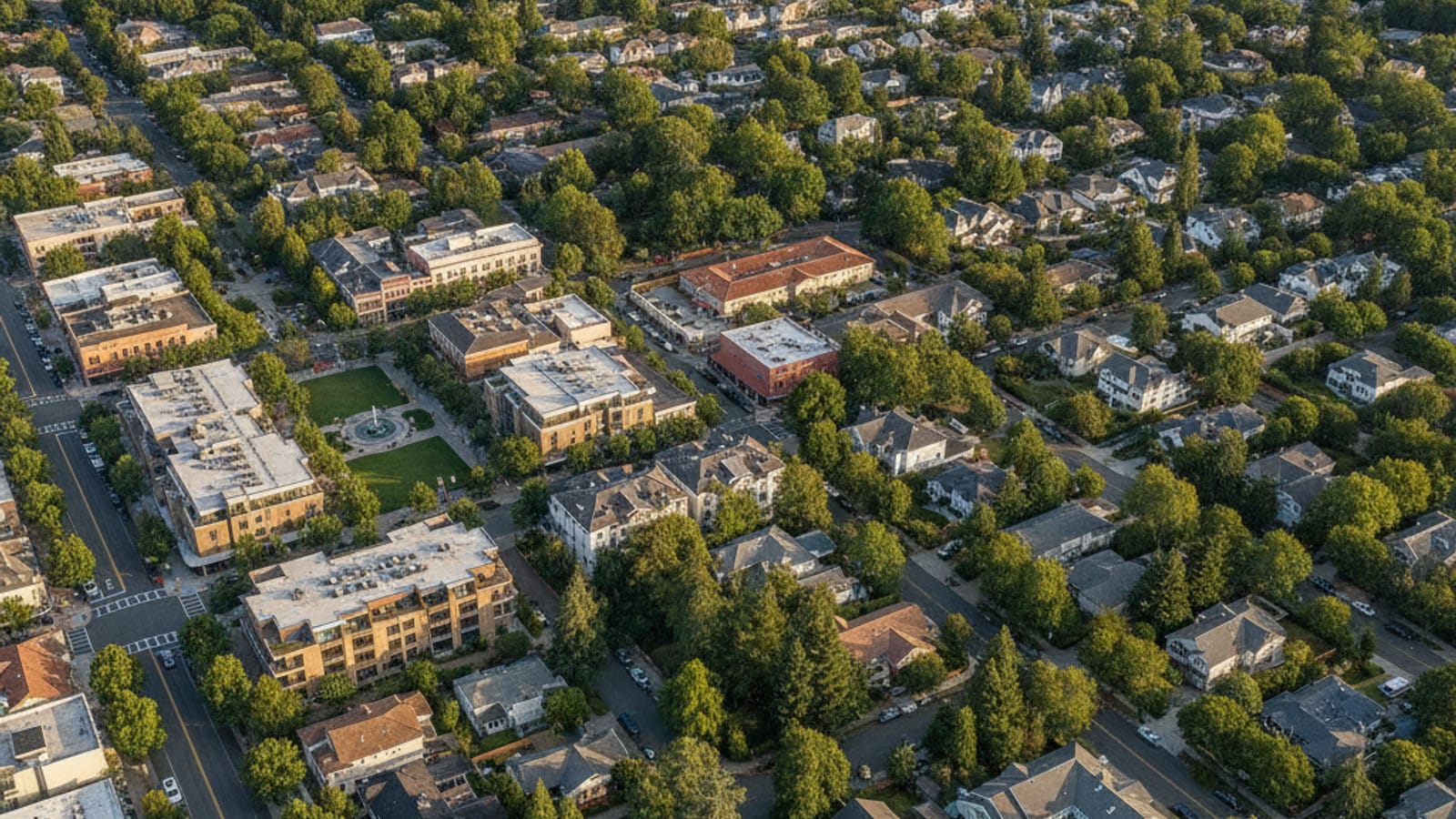
The city doesn't follow a simple grid. Downtown Healdsburg is the anchor, built around a historic town plaza ringed by tasting rooms, boutique shops, and art galleries. Beyond that core, local real estate data regularly references the Fitch Mountain area and the Foss Creek corridor - each with its own lot sizes, road layouts, and relationship to the central plaza.
Sonoma County Metropolitan Connection
Healdsburg sits inside the Santa Rosa–Petaluma metropolitan area, and most housing-market data groups it into that larger Sonoma County metro. That matters practically: buyers often widen their search to include the full metro zone, and comparing prices across the county gives you a clearer sense of where Healdsburg actually lands relative to neighboring towns.
Mapping Healdsburg Neighborhoods
Looking at a map early saves time. The downtown footprint is compact, and residential subdivisions fan outward from there toward the city limits. Once you see it spatially, the pricing starts to make more sense.
The price range across the city is genuinely wide - from $200,000 for vacant parcels to $16.75 million for large estates. That spread tells you more about lot size and location than it does about any single neighborhood.
Interactive Area Boundaries
Zoning boundaries determine what kind of housing can be built in each area, and they're worth looking at directly. Official zoning maps show exactly where attached housing gives way to detached single-family lots - something online listing filters don't always capture cleanly.
Those same boundaries shape commute times to the central plaza. Mapping out the actual drive from a property you're considering is a small step that prevents a lot of surprises later.
North, South, and West Zones
Density shifts noticeably as you move away from the city center. The downtown core concentrates most of the attached units; the outer edges open up into larger parcels. If you're set on a particular property type, map filters that isolate those zones will keep your search from drifting into areas that don't fit your budget or needs.
Home Types and Prices Across the City
Homes in Healdsburg are spending roughly 40 days on the market before selling. In recent months, approximately 38 homes sold across the city, and active inventory sits at around 68 available homes at any given time. That's a defined pool - not overwhelming, but tight enough that you need to know what you're looking for before something good comes up.
Single-Family Homes
Detached houses make up a large share of the inventory outside the immediate downtown footprint. Areas like the Fitch Mountain area and Parkland Farms are where you'll find traditional single-family layouts with private yards, and prices there tend to track closely with the citywide median of $1.33 million - though square footage moves that number in both directions. Factor in property maintenance costs when you're building out your monthly budget.
Condos and Attached Housing
Attached housing is a different entry point entirely. In Downtown Healdsburg specifically, recent sales data shows luxury condos selling for up to $7.8 million. More modest attached units and smaller parcels do surface at lower price points, but buyers should account for homeowner association fees - those add to your actual monthly cost in ways the list price doesn't show.
Specific Area Profiles
Named areas in Healdsburg each carry a distinct real estate profile. The most useful way to evaluate them is through concrete data: median list prices, dominant home types, and how far a given location sits from major roads. One broader number worth knowing - the median household income in Healdsburg is $103,554, and the local poverty rate is 11.61%. That economic context is useful when you're trying to read the market.
Downtown Healdsburg
Downtown Healdsburg is the most recognized area in the city, and the most searched. Everything revolves around the historic town plaza - tasting rooms, boutique shops, art galleries, all walkable. Housing here leans toward luxury condos and attached units, and you pay for that proximity to the central commercial district.
Fitch Mountain and Foss Creek
The Fitch Mountain area is defined by its topography. It's further from the downtown plaza, so most errands require a short drive - a real consideration depending on how you use your home. The Foss Creek corridor is another distinct zone in local real estate records, and buyers looking there will find a mix of property ages and lot sizes that differs from the newer developments closer to town.
Cost of Living and Local Data
A sale price is just the starting point. Buyers who skip the research on crime statistics and school boundaries sometimes end up surprised - and not pleasantly. The right move is to go directly to official municipal portals rather than leaning on third-party summaries, which are often outdated or imprecise about specific streets.
Researching Local Crime Rates
The Healdsburg Police Department maintains a CitizenRIMS Crime Mapping portal that's available to the public online. You can pull reported incidents by area without calling anyone. The Sonoma County Sheriff's Office also hosts an open data portal for current and historical event logs - that county-level database tracks arrests and incidents and lets you search by specific address.
Public School Attendance Zones
Public schools in the city are operated by the Healdsburg Unified School District (HUSD), based at 1028 Prince Street. The district runs two elementary schools, Healdsburg Junior High, and Healdsburg High School. Your child's school assignment depends entirely on the physical address of the home - not the subdivision name, not the neighborhood label. Confirm the attendance zone through official HUSD maps for any specific listing you're seriously considering.
Starting Your Property Search
With roughly 68 homes actively listed, the inventory is manageable but not wide open. Recent sales have closed at about 97.7% of list price - sellers aren't giving much away. About 21% of recent sales closed above the original list price, which means showing up without financing in order is a real liability. Get that sorted before something you want hits the market.
Reviewing Active Listings
Online portals let you sort by neighborhood name, property type, and price. Set firm price filters and stick to them - it's easy to drift upward and harder to justify it later. Pay attention to days on market for individual listings. Anything sitting well past the 40-day median is worth a closer look; sellers in that position are often more flexible.
Working With a Local Professional
A local agent can pull neighborhood covenants and HOA documents before you make an offer - those outline what you can and can't do with the property, including exterior modifications. They also track which subdivisions have upcoming assessments or infrastructure projects in the pipeline. Finding that out after closing is a much less pleasant experience than finding it out before.
Downtown and the Plaza
The heart of Healdsburg is its Plaza—the literal and cultural center of town. This is the most walkable neighborhood in the county. From your front door, you're steps from tasting rooms, Michelin-rated restaurants, boutique shops, and the farmers market. The grid pattern of streets (Plaza Street, Matheson, Healdsburg Avenue, Center Street) makes navigation effortless, and many residents walk to everything they need.
This walkability comes at a premium. Downtown homes are the most expensive per square foot in Healdsburg. Entry-level homes (smaller cottages and townhouses) start around $1.5 million. Larger, established homes easily hit $2 million and beyond. If you're retiring to Wine Country and plan to spend most evenings at restaurants and tasting rooms, or if you're a second-home buyer who values convenience, downtown delivers.
The Lanes: Josephine and Florence
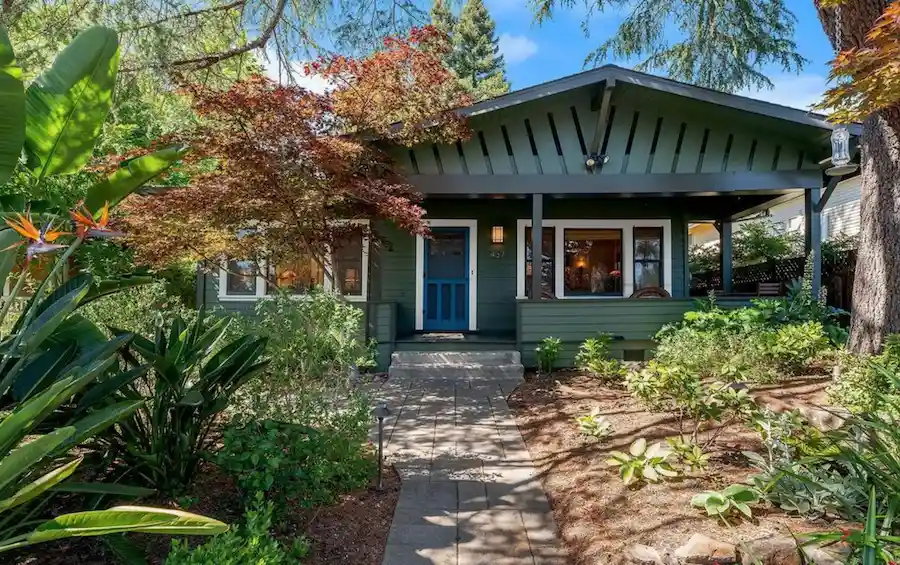
North of downtown, The Lanes (primarily Josephine Lane and Florence Lane) offer a quieter residential feel while staying walkable to the Plaza—about a 15-minute stroll. This neighborhood attracts families who want connection to downtown without the foot traffic and noise.
Homes here are slightly more affordable than downtown proper, though still premium by county standards. You get more space (larger yards, more privacy) while maintaining proximity to schools, shopping, and dining. The tree-lined streets and established neighborhood feel make this popular with buyers settling in for the long term rather than second-home purchasers.
Fitch Mountain: Value and Views
On Healdsburg's east side, Fitch Mountain rises dramatically, offering hillside homes with views overlooking the Russian River Valley. This is where entry-level Healdsburg homes live—some starting under $1 million, though most hover between $1.2 and $1.8 million depending on views and lot size.
The tradeoffs are real. Winding roads mean less walkability, steeper driveways are winter challenges, and much of Fitch Mountain falls in the fire zone (meaning higher insurance and evacuation risk during fire season). But if you want to own in Healdsburg on a tighter budget, have river access, and don't mind a short drive to town, Fitch Mountain delivers value you won't find elsewhere.
West Healdsburg and Westside Road
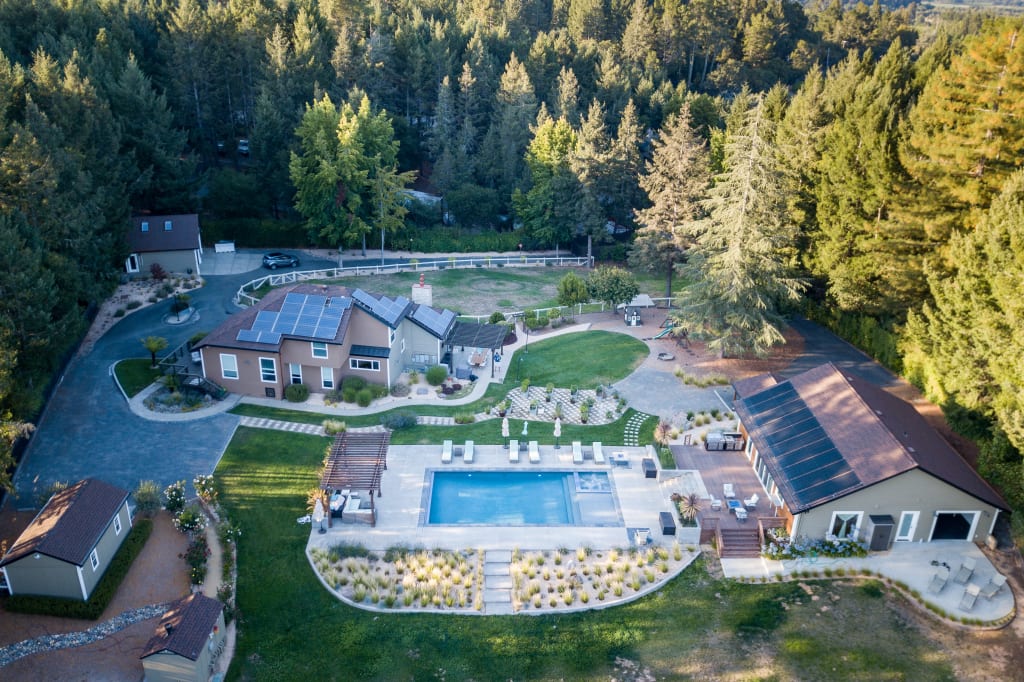
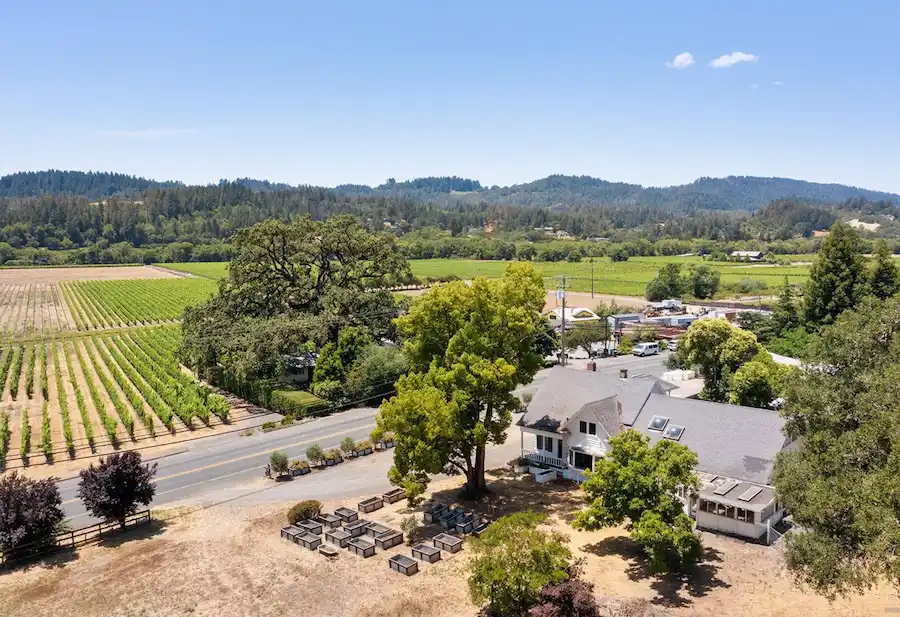
Head west from downtown and the landscape shifts to vineyard properties and estate-style living. Westside Road and surrounding neighborhoods feature larger lots, rural character, and the kind of Wine Country views that defined your reason for moving here. This is where second-home buyers with deeper pockets congregate—homes typically range from $2 million to $5 million and beyond.
These properties appeal to Bay Area professionals seeking weekend escapes with space to entertain, possibly with vineyard or orchard acreage. The trade-off is distance: you're 15-20 minutes from downtown, so spontaneous dinner reservations require planning.
Alexander Valley and Beyond
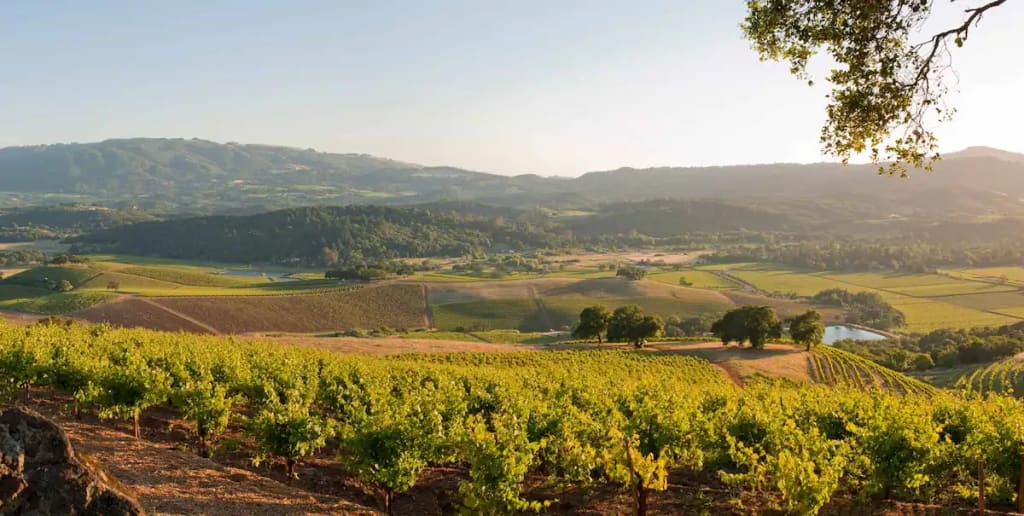
North of downtown, Alexander Valley properties tend toward estate acreage, vineyard views, and significant land. These are destination homes for buyers seeking privacy, views, and agricultural potential. Prices scale with acreage and amenities, but entry starts around $2 million for smaller estates.
Parkland Farms: Modern Family Living
North side Parkland Farms offers newer construction, modern designs, and a more affordable price point than downtown or west-side estates. This neighborhood appeals to families and first-time Healdsburg buyers who want contemporary homes in a family-friendly setting without the premium of downtown walkability.
Healdsburg's 17 distinct neighborhoods each have character, but these four form the core decision tree: downtown for walkability, The Lanes for family living, west side for estate wines, and Fitch Mountain for value. The best neighborhood isn't the most expensive—it's the one that matches how you actually want to live. If you're considering a move to Healdsburg, understanding these neighborhoods is your first step.
Before you make the leap, take time to explore. Spend weekends in different neighborhoods at different times of day. Grab dinner downtown on a Saturday, walk The Lanes on a weekday morning, drive Westside Road at sunset. Read our guide on five things you need to know before moving to Healdsburg, and if you're deciding between Healdsburg and Sonoma, we've compared Healdsburg and Sonoma neighborhood by neighborhood. And if you're exploring a second home purchase in the broader county, our guide to buying a second home in Sonoma County covers all the top neighborhoods across the region.
Frequently Asked Questions
Which Healdsburg neighborhoods are within walking distance to the downtown Plaza?
Downtown Healdsburg is the primary area with immediate pedestrian access to the historic town plaza. That central zone puts tasting rooms, boutique shops, and art galleries right outside your door.
Where are the most affordable neighborhoods to buy a home in Healdsburg, CA?
Price varies more by housing type than by neighborhood boundaries. The citywide median sale price is approximately $1.33 million, but buyers can find lower-priced options - vacant parcels, for instance, start around $200,000.
Which Healdsburg neighborhoods have the best access to local schools?
School access is determined by official attendance boundaries, not neighborhood names. The entire city falls under the Healdsburg Unified School District (HUSD), which assigns students to its specific elementary, junior high, and high schools based on home address.
What is the difference between living in Parkland Farms versus the Fitch Mountain area?
Parkland Farms and the Fitch Mountain area offer different housing styles and locations within the larger Healdsburg market. Both areas participate in a local market where homes sell in about 40 days for a median price of roughly $1.33 million.
Thinking about which Healdsburg neighborhood fits your life? We live and work here every day and can walk you through the options. Email me directly at david@bruingtonhargreaves.com.