
In Windsor, the median home recently sold for exactly 100% of its list price after a median of 50 days on the market. This data covers all homes over the 90 days ending September 30, 2026.
Key Takeaway
Staging pays off in Windsor when you target specific rooms rather than defaulting to a whole-house package. Most homes sell right at list price, so a clean, well-arranged space is what separates a listing from the rest. If you're living in the house, focus your staging budget on the living room, kitchen, and primary bedroom.
Who This Guide Is For
You're preparing a Windsor home for sale and deciding whether to pay for professional staging, stage only part of the house, or handle the preparation yourself.
Does Staging Your Home Pay Off in Windsor?
Staging here is less about triggering a bidding war. Its job is to move your listing into the over-list minority and shorten the weeks you spend paying to carry the house. There were 51 homes in inventory over the 90 days ending in late September 2026, so buyers have options. The real decision is how much to stage.
Selling at the Asking Price Is the Norm
Only 29.1% of homes sold above asking, so roughly seven in 10 sold at or below it. Buyers aren't handing out premiums just for showing up.
Listing photos and the first walkthrough usually determine whether a property lands in the over-list third. Staging helps a well-priced home grab attention. It can't rescue an overpriced one.
Time on Market and What It Costs You
Single-family houses sold a little faster than all homes, at a median of 44 days. Either way, expect to pay about seven weeks of mortgage, property tax, insurance, and utility bills before closing.
The higher all-homes median suggests the 11 non-single-family sales took slightly longer. That is worth watching if you own a condo or townhome. Total your own monthly carrying costs to see what each extra week on the market costs you.
What National Surveys Say About Staging Returns
The National Association of Realtors' 2025 Profile of Home Staging found that 83% of buyers' agents said staging made it easier for a buyer to envision the property as their future home. The same survey showed nearly three out of 10 agents reported staging led to a 1% to 10% increase in the dollar value offered compared to similar unstaged homes.
These are self-reported national agent opinions, not measured local sale prices. Treat them as a general indicator rather than a forecast for your home.
What You Can Expect to Pay for a Stager
Staging companies typically break their pricing into a consultation fee, an installation charge, and a monthly furniture rental rate. Get two or three written quotes that list the monthly rate and the minimum term separately before you commit to anything.
Standard Professional Fees and Minimums
The 2025 NAR survey reported a median cost of about $1,500 for professional staging services, which dropped to around $500 when the seller's agent handled it. Locally, Staged Right Sonoma, a Sonoma County-based staging company, quotes full-service staging starting at $3.00 to $4.00 per square foot depending on the home's price tier.
That quote includes one month of furniture rental, a one-month minimum, and a $3,000 minimum charge for entry-level properties. Additional months run equal to one-third of the original staging cost. If the listing sits, the quote you sign is a floor, not a final number.
Staging Costs in Context
The median sale price for all homes in the area sits at around $814,612. At that price, 1% of the sale value is roughly $8,146.
Compare a written staging quote to that figure, and separately to one month of your own carrying costs. If staging costs less than either, it only has to improve the final price or shorten the timeline slightly to cover itself. Nothing guarantees staging will move your price that much or cut a month off the sale. The exercise does tell you how small a gain would cover the cost.
The Price Difference Between Vacant and Occupied Homes
Staging an occupied property mostly uses your existing furniture mixed with a few rented accessories. That keeps the total bill far lower than outfitting an empty house. Staging a vacant home means renting a full set of furniture for every main room, which drives up both the installation fee and the monthly rental rate.
If the house is empty, check that your homeowners policy still covers a vacant property while it's listed.
Five Ways to Stage Your Property
Buyers in the area are comparing your listing photos against dozens of others. Decide how much intervention your home needs; the options below run from cheapest to costliest.
DIY Prep and Decluttering
If you want to keep costs low while still living in the home, start with a deep clean and depersonalize the space. Remove a third of the furniture, clear most counter items, and fix small maintenance issues. This is the baseline preparation every listing needs before photos.
Sellers rarely see their own clutter, but the listing camera always does. Without an outside eye, DIY prep tends to stop short of where it needs to be.
Stager Consultation
In a consultation, a stager walks through the home and tells you what to move, remove, buy, or rent, room by room. It works well for occupied homes where the existing furniture mostly fits the space. You get an outside perspective without paying monthly rental fees.
Ask for the advice in writing so you have a checklist to follow. You still do all the work yourself before photos.
Partial Staging
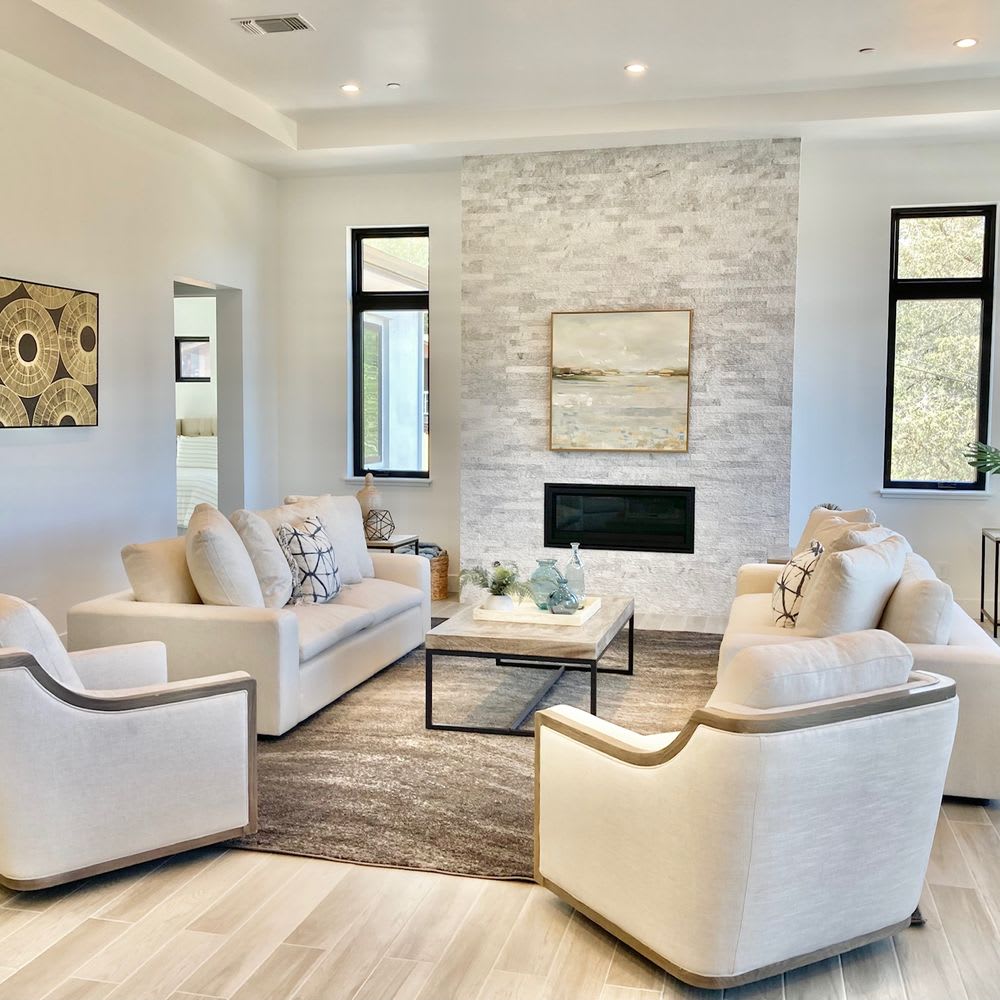
Partial staging targets the rooms that do the most work in photos and showings, leaving secondary rooms simply cleared out. Per the 2025 NAR report, staging the living room mattered most to buyers (37%), followed by the primary bedroom (34%) and the kitchen (23%).
If your furniture is oversized or dated, focus your budget on those spaces rather than paying for a whole-house package. A staged living room next to a bare or crowded secondary bedroom can feel uneven on a walkthrough, so the unstaged rooms still need to be cleared and clean.
Full Staging
Full staging fills every main room of a vacant home with rented furniture and decor. Empty rooms photograph poorly and look smaller on a screen, so furnished rooms help your home compare well against the competition.
It's the most expensive option, and the monthly rental runs until the furniture is picked up. A slow sale makes it costlier every month.
Virtual Staging
Virtual staging adds furniture to photos of empty rooms at a fraction of the cost of physical staging. It works best when you want to show a vacant home's potential on a tight budget. It pairs well with clean, well-lit empty rooms and one or two physically staged key spaces.
The catch is that buyers who liked the photos walk into empty rooms at the showing, which can feel like a letdown. Altered images must also be disclosed under California's AB 723.
Where to Focus Your Staging Efforts Room by Room
Buyers move from the front entry, which sets the tone, to the main living spaces, which confirm whether the house fits their life. Ask your listing agent which rooms read as dated or cluttered in test photos before deciding what to stage.
The Front Entry and Curb Appeal
This is both the first listing photo and the first impression at a showing. Put down fresh mulch, trim the yard, clean the front door, and update the house numbers and lighting.
Time plantings for the season. New plants need watering and time to settle before the photographer arrives, and in a dry late summer, lawns and beds can brown out quickly. Start weeks ahead.
Living Room and Kitchen
Arrange the living room around conversation areas and natural light rather than the television. Clear the kitchen counters down to one or two pieces, empty the sink, clear the fridge front, and update the light fixtures.
If you're living there, cleared counters and a staged sofa arrangement have to be reset before every showing. That wears thin over several weeks.
The Primary Bedroom and Bathrooms
Use neutral bedding, matched nightstands and lamps, and keep the floor completely clear. In the bathrooms, put out fresh white towels, hide all toiletries, and add new caulk around the tub or sink where needed. The goal is an impersonal, hotel-like feel that lets buyers picture their own belongings in the space.
Personal items, medications, and valuables need to disappear before every showing, not just on photo day.
Patios and Outdoor Living Spaces
The local climate makes outdoor living a real selling point, so treat a patio or deck as a usable outdoor room. Add a simple seating set, a clean table, and a few potted plants. Keep the arrangement sparse so buyers can see the size of the space.
Cushions fade or get soaked if left out, and a winter listing may show a wet, empty patio regardless of your efforts.
Finding and Vetting a Local Staging Company
Check a stager's inventory style and contract terms before hiring. Your listing agent can also share stager contacts they've worked with successfully in the past.
Where to Look for Local Professionals
Most stagers that come up in searches for Windsor are based in Santa Rosa or Healdsburg and serve the area from there. Check their portfolios for recent local listings, read their reviews, and ask your listing team for referrals.
Confirm the stager regularly serves the town before you plan your listing date around their availability. A stager based in another town may add delivery or travel fees, or require longer lead times.
What to Ask Before Signing a Contract
Ask about the monthly rate and minimum term, and what happens to the bill if the home sells early or sits past that minimum. Ask what the installation and pickup fees are. Request proof of liability insurance, and confirm in writing who pays if staged furniture is damaged during a showing.
The early-termination and damage clauses are where surprises usually hide, so read them before you sign. If you're selling a townhome or condo, ask the HOA about rules for furniture deliveries or elevator reservations.
Preparing for Your Target Listing Date
Settle pricing, timing and the rest of the selling process before booking a stager, so installation finishes ahead of your photo date. Local housing market conditions show what buyers are currently paying and how fast homes are moving.
Your agent can walk through the property with you to decide which rooms need staging before the photographer arrives.
At a Glance
- Median sale price, all homes: $814,612, up 1.8% year over year (90 days ending 2026-09-30)
- Median sale price, single-family homes: $837,166, up 3% year over year (90 days ending 2026-09-30)
- Homes sold: 56 (all homes) and 45 (single family) (90 days ending 2026-09-30)
- Median days on market: 50 (all homes) and 44 (single family) (90 days ending 2026-09-30)
- Median sale-to-list ratio: 100% (all homes) and 100.3% (single family) (90 days ending 2026-09-30)
- Share sold above list price: 29.1% (all homes) and 31.8% (single family) (90 days ending 2026-09-30)
- Months of supply: 2.8 (all homes) and 3 (single family) (90 days ending 2026-09-30)
- Homes in inventory: 51 (all homes) and 44 (single family) (90 days ending 2026-09-30)
- Median price per square foot: $436 (all homes) and $465 (single family) (90 days ending 2026-09-30)
Home Staging in Windsor FAQs
How Long Do You Rent Staging Furniture When Selling a House?
Usually by the month with a minimum term, such as the one-month minimum in the Staged Right Sonoma quote. Confirm the minimum term and the extra-month rate in writing before signing.
Who Pays for Home Staging, the Seller or the Listing Agent?
The seller usually pays, though some listing agreements include a consultation or a contribution, and the NAR median cost falls sharply when the agent handles staging. Confirm in your listing agreement who pays for what before hiring anyone.
Can You Deduct Home Staging Costs When You Sell Your Home?
IRS Publication 523 (2025) does not list staging by name as a selling expense. It defines selling expenses as costs directly associated with selling the home, such as sales commissions and advertising fees. This isn't tax advice, so confirm your situation with a tax professional.
Do Virtual Staging Photos Have to Be Disclosed in California?
Yes. Under AB 723, effective January 1, 2026, a real estate broker or salesperson, or someone acting on their behalf, who includes a digitally altered image in an advertisement must include a reasonably conspicuous statement disclosing the alteration. If the advertisement is posted on a website, the same image without digital alteration must also be included.
How Far Ahead Should I Book a Stager Before Listing Photos?
Ask each stager for their current lead time and how long installation takes. Schedule your listing photos only after installation is finished.
Should I Repaint Before Staging Your House?
The 2025 NAR survey found agents most commonly recommend decluttering (91%), cleaning (88%), and improving curb appeal (77%) before listing. Repaint only rooms that look dark or dated in your agent's test photos.