
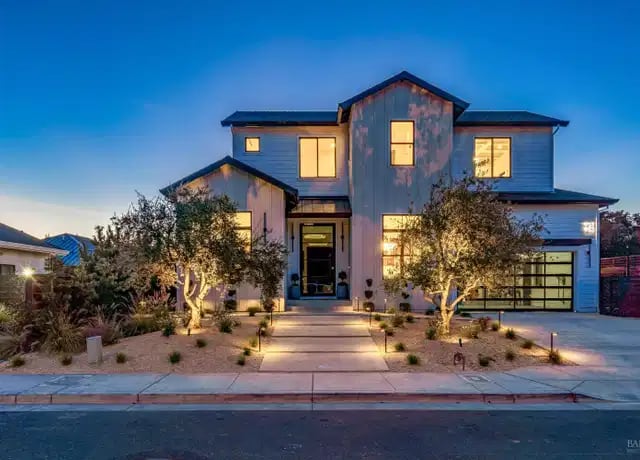
Single-family homes in Healdsburg currently take a median of 64 days to sell. A buyer touring your property has likely seen several others and has the time to weigh their options carefully.
Because buyers aren't rushing to beat competing offers, they price in every problem they find instead of bidding up new finishes. Adding value before you list comes down to removing reasons for a buyer to negotiate the price down.
Key Takeaway
The project most likely to raise a Healdsburg sale price right now is fixing what a buyer's inspector, insurer, and permit search will turn up. With 5.1 months of single-family supply, buyers discount problems like roof issues or unpermitted work rather than pay up for new finishes. If the house is already sound, fresh paint and lighting are the low-cost alternative, while additions only make sense if you'll hold the house long enough to absorb the build time.
Who This Guide Is For
You own a home in Healdsburg and are deciding which improvements, if any, to make before you sell.
How to Increase Home Value in Healdsburg
The value you can add before selling comes from removing buyers' reasons to negotiate, not from remodels. Single-family homes take a median 64 days to sell, close below asking, and there are 5.1 months of supply.
For the bigger picture, see Selling a Home in Healdsburg.
Buyers discount defects, insurance trouble, and permit gaps instead of bidding up new finishes. A buyer touring your house has seen others and has time, so they price in every problem they find.
That splits your preparation into two groups: repairs that stop discounts, which usually return the most money, and upgrades that can lift the price. Then there are projects you should skip altogether.
Healdsburg Home Values at a Glance
Single-family home prices rose year over year in Healdsburg, so the equity is there. Slow absorption, though, means the condition of your property decides how much of that equity you keep at the closing table.
The figures below show recent sales activity. Review our local housing market page for broader trends across the county.
- Median sale price, all homes: $1,049,500 (90 days ending Sept. 30, 2026; 38 sales)
- Median sale price, single-family homes: $1,029,590 (90 days ending Sept. 30, 2026; based on 29 sales, a small sample)
- Year-over-year change in median sale price: +7.5% for all homes; +4.2% for single-family homes (90 days ending Sept. 30, 2026; single-family based on 29 sales)
- Median days on market: 63 for all homes; 64 for single-family homes (90 days ending Sept. 30, 2026)
- Sale-to-list ratio: 98.7% for all homes; 97.9% for single-family homes (90 days ending Sept. 30, 2026)
- Share sold above list price: 18.9% of all homes; 13.8% of single-family homes (90 days ending Sept. 30, 2026)
- Months of supply: 5.3 for all homes; 5.1 for single-family homes (90 days ending Sept. 30, 2026)
- Homes for sale: 65 all homes; 49 single-family homes (90 days ending Sept. 30, 2026)
- Median price per square foot: $680 for all homes; $631 for single-family homes (90 days ending Sept. 30, 2026; single-family based on 29 sales)
Repairs That Keep Buyers From Negotiating the Price Down
Single-family homes in Healdsburg are closing at 97.9% of their asking price, which means the negotiating room buyers are finding is real. Spend money so they have fewer reasons to ask for credits or walk away from the deal entirely.
Buyers will bring in inspectors. Their lenders will require insurance and clear title. Addressing these hurdles beforehand keeps a buyer from asking for a lower price during escrow.
Make the House Insurable and Fire-Ready
In wine country, a buyer's lender requires a homeowners insurance policy, and fire risk drives what insurers will offer. Clear defensible space, install ember-resistant vents, and make sure your roof and gutters are in good condition. California's Safer from Wildfires framework requires admitted insurers to offer discounts for documented mitigation measures like Class-A roofing and enclosed eaves.
Under AB 38, sellers of homes in Very High Fire Hazard Severity Zones must give buyers documentation of defensible-space compliance or a written agreement to comply. California's Board of Forestry also recently adopted "Zone 0" regulations that will require an ember-resistant zone within five feet of qualifying structures in these areas. They're not fully in effect as of November 2026, but existing structures will face a phased compliance timeline of three to five years.
Look up your address on CAL FIRE's fire hazard severity zone map before deciding on fire-hardening work. Hardening improves your position but can't guarantee a buyer gets a standard policy. Some properties still only get California FAIR Plan quotes, and the hazard-zone designation itself must be disclosed whatever you fix.
Resolve Permit Gaps and Historic Review
A buyer's agent can pull your property's permit history from the City of Healdsburg Building Division. Converted garages, added bathrooms, or decks built without permits become negotiating points or appraisal problems. The city has a process for legalizing past work and issues retroactive permits for previously unpermitted electrical, mechanical, and plumbing work.
If your home is in the historic overlay, exterior changes such as windows, siding, or porches can require design review before work starts. Check with the city Planning Department whether your home is in a historic overlay before making any exterior alterations.
Request your property's permit history from the city and compare it with the home's current layout. What you give up is time: legalizing old work can trigger current-code upgrades and take months of review. If you're listing soon, disclosing the work and pricing it in may cost less than permitting it.
Fix Inspection Items Before You List
On a median-priced home, that roughly 2% gap between list and sale price is about $22,000, and every inspection finding gives a buyer a reason to push for more. Order a pre-listing inspection and fix roof leaks, drainage problems, electrical safety items, and water heater strapping.
Once a California seller knows about a material defect, it must be disclosed to buyers, fixed or not. If you want the fastest payback with only a few weeks before listing, start here.
One catch: a pre-listing inspection turns unknowns into things you must disclose. If you won't fix what it finds, it can hand buyers a list of problems rather than take one away.
Well, Septic, and Other Country-Property Systems
Many homes outside city limits run on wells and septic systems rather than city water and sewer, and a buyer's lender and inspector will scrutinize them. Have a well tested for flow and quality, and the septic pumped and inspected, before listing a country property.
Having the results in the disclosure package prevents surprises mid-escrow. Review our utilities page for a comparison of city water versus well costs. If a test fails, the remedy can be expensive and slow, such as digging a new leach field. Some sellers end up crediting the buyer rather than finishing the repair before closing.
Upgrades That Can Raise Your Sale Price
Only 13.8% of single-family homes sold above their list price recently (based on 29 single-family sales). Projects that make buyers pay more, rather than ask for less, should be ordered by cost and time. Not all renovations pay for themselves at the closing table, so the focus should be on improvements that buyers in this specific market are willing to fund.
Paint, Lighting, and Outdoor Space
The cheapest and fastest gains come from neutral interior paint, updated light fixtures, and a usable patio or garden. These show off indoor-outdoor living in a wine-country town and help your listing stand out among the 49 single-family homes currently on the market. Keep landscaping drought-tolerant and get at least two contractor bids before comparing a project's cost with the value figures on this page.
If the house is already in good repair, paint, lighting, and outdoor space are the right starting point. Cosmetics don't offset a condition problem, though. A freshly painted house with an old roof still gets the roof credit request, so finish the repair group first.
Kitchen and Bath Refreshes
Consider a refresh with cabinet paint or refacing, new hardware, counters, and fixtures over a gut remodel. In the regional Cost vs. Value data, a midrange minor kitchen refresh recoups a larger share of its cost than a major kitchen remodel.
The 2025 Cost vs. Value report prices a midrange minor kitchen remodel in the San Francisco region at $31,804, recovering 112.4 percent of its cost at resale. A midrange major remodel costs $97,667 and recoups 48.5 percent, while an upscale one recoups 32.1 percent.
Regional averages aren't your street. Finishes chosen to your taste can read as a project to the next buyer, and a remodel started late can push the listing past the season you planned for.
Adding Square Footage or an ADU
At the single-family median of $631 per square foot based on 29 sales, 300 finished square feet works out to about $189,300 of market value as an upper bound. Garage conversion ADUs in Sonoma County run $90,000 to $160,000, while a detached new-build ADU runs $250,000 to $450,000 for 600 to 900 square feet in 2026. That implies a hard-cost range of roughly $280 to $750 per square foot depending on type and size.
A building permit is required for all ADUs in Healdsburg, and California law requires cities to act on a complete ADU permit application within 60 days. The $189,300 bound is high because a detached unit isn't valued exactly like main-house space, and appraisers may treat it differently.
What you give up is speed: design, permitting, and construction take many months. This only makes sense if you'll own the house long enough to finish the project and possibly rent or live with the space first.
Projects That Rarely Pay Back Before a Sale
Certain upgrades rarely return their cost in a market where few homes sell over asking. Adding a pool, installing personal finishes, or choosing luxury upgrades that push a house past what recent sales on its street support won't guarantee a higher price.
Starting a large remodel within months of listing carries high risk. Compare planned finishes and the asking price with recent sales on your street before committing to an upgrade. Over-improving is money you're unlikely to see bid back. Buyers won't pay for features that price the home out of the neighborhood's established range.
How to Decide Which Projects to Do
The at-a-glance numbers at the top of this page are the yardstick for any project you consider. Use these questions to determine what makes sense for your property.
- Will a buyer's insurer or inspector find something, such as an older roof, overgrown vegetation, drainage, or sewer issues? Start with "Make the House Insurable and Fire-Ready" and "Fix Inspection Items Before You List."
- Was any past work done without permits, is the house in a historic overlay, or does it run on a well and septic? Go to "Resolve Permit Gaps and Historic Review" and "Well, Septic, and Other Country-Property Systems."
- How long until you list? Under about three months points to "Paint, Lighting, and Outdoor Space" and "Kitchen and Bath Refreshes." A year or more makes "Adding Square Footage or an ADU" worth running the numbers on.
- Is the project something buyers here would pay for, or something you'd enjoy? If it's the latter, read "Projects That Rarely Pay Back Before a Sale" before spending.
Next Steps Before You List
Preparing a home for the market involves balancing the cost of repairs against your timeline. Review our selling process page for details on pricing, timing, and the steps to list your property.
You can also check our cost of living page for context on what buyers budget for when moving to the area. David Hargreaves and Jonathan Bruington can walk the house and flag which projects are worth doing before listing.
Healdsburg Home Value FAQs
Are Home Values Going Up in Healdsburg?
Yes, the median sale price rose 7.5% year over year for all homes and 4.2% for single-family homes (based on 29 sales) during the 90 days ending September 30, 2026. Rising values don't mean fast sales, so check our housing market page for broader trends.
Is It Expensive to Live in Healdsburg, California?
Housing costs are high, with a median sale price of $1,049,500 for all homes based on 38 sales over the 90 days ending September 30, 2026. Review our cost of living page for a full breakdown of what residents budget for daily expenses.
What Devalues a House the Most in Healdsburg?
Location factors an owner can't fix, such as a fire hazard severity zone designation or a FEMA flood zone near the Russian River, impact value. About 8% of residential structures in Healdsburg sit in a 100-year or 500-year FEMA flood zone. Fixable issues like unpermitted work or deferred maintenance also lower value, so focus on the repair steps outlined above.
How Can I Increase My Home's Value by $50,000?
Adding $50,000 in value equals roughly 80 square feet of finished space at the current single-family median price per square foot. Most owners reach this number by combining good presentation with repaired defects to avoid buyer concessions, rather than completing one large project. Get two contractor bids to price out any planned work.
What Room Adds the Most Value to a House in Healdsburg?
Kitchens and bathrooms return the highest percentage of your investment. In the Pacific region, a midrange bath remodel costs $27,710 and recoups 91% of that expense, while an upscale primary suite addition costing $390,895 recoups just 18.6%. Outdoor living space is also a major selling point in wine country.
Does Solar Add Value to a Home in Healdsburg?
It depends on the system and the local utility rules. Healdsburg is served by its own municipal electric utility rather than PG&E, so solar payback relies on the city's specific net metering terms. Owned systems transfer simply, but if you have a leased system, you'll need to check the lease terms and secure buyer approval.
Does Healdsburg Require a Sewer Lateral Inspection When You Sell?
Yes, the City of Healdsburg requires a video inspection and repair of private sewer laterals and public sewer mains when you sell or transfer a property. The property owner must obtain a Certificate of Private Sewer Lateral Compliance, and video inspections are valid for six months. If the most recent certificate is over 20 years old, a new inspection video is required.
How Accurate Are Online Home Value Estimates in Healdsburg?
Automated estimates often struggle in small markets. With few recent sales to work from, algorithms have a hard time finding comparable properties to generate an exact price. Compare any online estimate with recent sales of similar homes nearby to get a truer picture.
Sources
- Redfin: Data Center
- California Legislative Information: Civil Code Section 1102.19
- City of Healdsburg: Fire Hazard Severity Zones
- California Legislative Information: AB 1
- California Legislative Information: AB 3074
- City of Healdsburg: Permits Not Required
- California Legislative Information: Civil Code Section 1102
- Projects Within Reach: Kitchen Remodel Cost
- JLC Online: Cost vs Value 2025 Pacific
- Sonoma Revamp: ADU Rules Sonoma County 2026
- California Legislative Information: Government Code Section 66317
- City of Healdsburg: Sewer Lateral Ordinance
- City of Healdsburg: Flood Information