
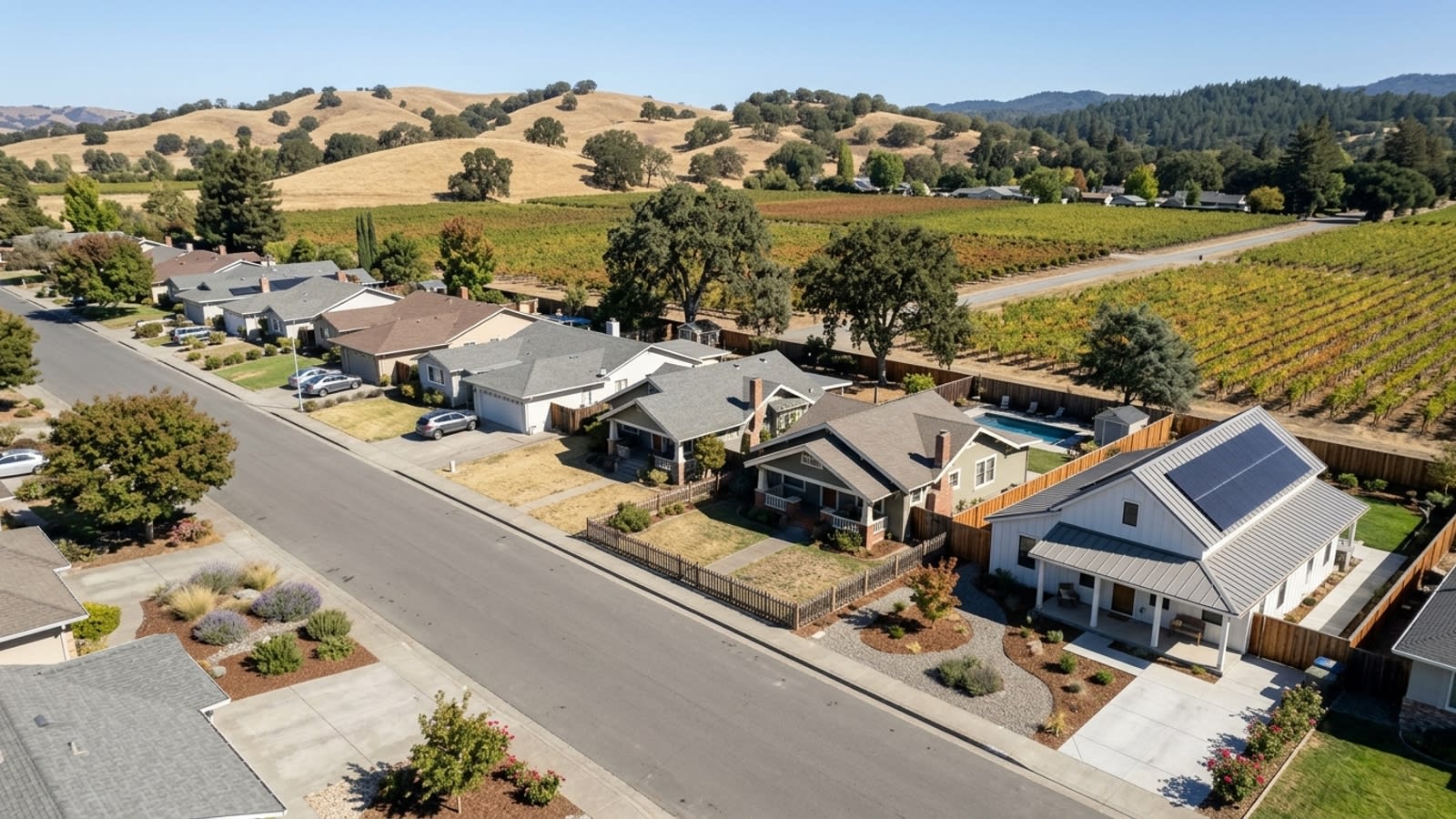
Healdsburg, CA sits at about 106 feet of elevation in Sonoma County, and the weather here isn't just background noise - it shapes daily life, property maintenance costs, and the agricultural economy that defines the region. If you're weighing the pros and cons of living in Healdsburg, CA, understanding the climate across all four seasons isn't optional. It'll affect your utility bills, your landscaping budget, and how much you use your outdoor spaces.
The seasons are distinct, the pattern is predictable, and moderate temperatures dominate most of the calendar. That predictability is part of what makes this area work so well for the wine industry - and for anyone who wants to be outside more than half the year.
The Healdsburg Climate Profile
Healdsburg falls into the Köppen-Geiger classification of Csb - a warm-summer Mediterranean climate. Long, warm, dry summers. Mild, wet winters. Not much rain between June and September, then a reliable wet season that arrives and does its job before clearing out again.
That cycle is exactly why this part of Northern California is such fertile ground for vineyards. And for property owners, it means extended outdoor living - patios, gardens, and decks that get real use for a good stretch of the year.
Year-Round Seasons in Sonoma County
Temperatures and rainfall shift clearly from one season to the next here. Summer is dry heat with almost no rain from June through September. Winter flips the script - cooler daytime highs, overcast skies, and the bulk of the year's rainfall arriving in a concentrated stretch. Spring and fall land in the middle, offering the most comfortable conditions the area has to offer.
Fall also brings the wine harvest, which means mild days, crisp evenings, and a lot of visitors. If you're timing a move or a visit, that context matters.
Summer and Winter Patterns
Summer afternoons in Healdsburg are hot and dry, with clear skies the norm rather than the exception. Buyers coming from the Midwest or Northeast who expect summer thunderstorms will find things quieter here - and drier. Winter is the opposite: overcast days, regular showers, and rain gear that earns its spot by the front door. You won't be shoveling snow, but you will be watching the forecast.
Spring and Fall Shoulder Seasons
Spring brings warming temperatures and blooming landscapes across Sonoma County. Fall delivers harvest season - comfortable daytime highs, cool nights, and that particular quality of October light that makes the whole place look like a photograph. These two shoulder seasons are generally the most livable months of the year for anyone who spends time outdoors.
Average Temperatures Month by Month
July is the hottest month, with average highs reaching about 90°F and overnight lows dipping to around 54°F. January is the coldest, with daytime highs averaging 57°F and nights dropping to roughly 39°F.
One of the most defining features of Healdsburg's weather is that daily temperature swing. Even at the peak of summer, evenings routinely fall into the 50s. Bring a jacket to any outdoor dinner, no matter what month it is.
Monthly Highs and Lows
The temperature curve here is steady and readable. January opens at 57°F for the high and 39°F for the low. February warms slightly to 62°F / 42°F, and March reaches 66°F / 44°F. Spring climbs through April at 73°F / 46°F and May at 80°F / 50°F.
Summer peaks in June at 87°F / 53°F, July at 90°F / 54°F, and August at 88°F / 54°F. Then fall pulls things back - September at 84°F / 53°F, October at 76°F / 49°F, November at 64°F / 43°F - before December returns to 57°F / 39°F and the cycle starts over.
Rain, Snow, and Humidity Levels
Healdsburg averages 42.2 inches of precipitation per year, spread across roughly 73 days of measurable rain. Nearly all of it lands in winter. The wettest year on record was 1983 at over 96 inches; the driest was 1976 at just under 14 inches. That's a wide spread, and it's worth keeping in mind when thinking about drainage, landscaping, and roof condition on any property you're considering.
Humidity tracks with the seasons pretty cleanly. December averages around 74% to 78%. June drops to roughly 50% to 60%. You'll feel the difference.
Does It Snow in Healdsburg?
Essentially never. Average annual snowfall is zero inches, and most years stay that way. The record high for a single year is 0.8 inches, recorded back in 1976. If you're coming from a place where winterizing a home means frozen pipes and driveway shoveling, you can take those items off your list.
Wildfires, Flooding, and Natural Hazards
This is where I'd ask you to pay close attention, because this section matters more than people sometimes expect before they move here.
According to local hazard data, properties in Healdsburg face a moderate risk of wildfire over a 30-year period. Fire hazard maps show 73 acres classified as very high hazard and another 546 acres marked as high hazard within the city. The 2024 Point Fire - which ignited under red flag conditions - burned 1,207 acres of wildland and wineries near Healdsburg. That's not ancient history.
Wildfires also set the table for winter problems. Fire-scarred hillsides are vulnerable to heavy rainfall, and atmospheric rivers can trigger landslides and debris flows on terrain that would otherwise hold together fine.
Flood Zones and Insurance
Healdsburg carries a High Flood Risk score, and catastrophic flooding is a recurring concern across Sonoma County. Heavy winter storms regularly cause localized flooding near waterways and low-lying roads.
The city falls into FEMA flood zone X, which means it sits outside the 100-year flood zone but remains at risk from a 500-year flood event. Flood insurance isn't mandatory in this zone - but that doesn't mean your individual property is without risk. Look at the specific parcel, not just the zone designation, and decide whether coverage makes sense for your situation.
The Best Times to Visit or Move
April and October are the sweet spots. Average highs sit comfortably in the 70s, rainfall is low, and conditions are about as cooperative as weather gets for loading a moving truck or walking through open houses. May fits that window too, with daytime highs in the 80s before summer heat settles in. September is another solid option, as temperatures cool from the summer peak but stay dry.
Winter moves - December through February - mean working around the rainy season. You can do it, but plan for delays. July and August are dry and predictable, though you'll be doing the work in 80- to 90-degree heat.
How Climate Factors Into the Healdsburg Housing Market
The median sale price in Healdsburg is currently around $1,089,000, and homes are spending an average of 67 days on the market. At that price point, buyers tend to look carefully at what a home is equipped to handle.
Energy-efficient cooling for those 90-degree July afternoons and defensible space landscaping for fire safety are common priorities here - not nice-to-haves, but practical considerations that affect both livability and insurance costs. The market currently holds about 6.2 months of supply, with roughly 70 homes available and 35 recent sales. You have room to be selective. Use it. Factor in the cost of potential upgrades like climate-controlled storage or HVAC updates before you land on your number.
Frequently Asked Questions
What is the weather like in Healdsburg, CA year round?
Healdsburg has a warm-summer Mediterranean climate with hot, dry summers and mild, wet winters. Temperatures range from average lows of 39°F in winter to highs of 90°F at the peak of summer.
What are winters like in Healdsburg, CA?
Mild but consistently wet. Winters bring the majority of the area's 42.2 inches of annual rainfall, with daytime highs averaging in the upper 50s and low 60s. December humidity runs roughly 74% to 78%.
How hot do summers get in Healdsburg, CA?
July averages a high of 90°F. The saving grace is that evenings cool off - overnight lows typically drop into the low to mid-50s, which makes sleeping comfortable even without heavy air conditioning.
Does it snow in Healdsburg, CA, and how much?
No, not in any meaningful way. Average annual snowfall is zero inches. The highest amount ever recorded in a single year was 0.8 inches, back in 1976.
Are there wildfires or severe weather in Healdsburg, CA?
Yes on both counts. The area faces a moderate wildfire risk, and the 2024 Point Fire burned 1,207 acres near the city. Winter months bring heavy rainfall that can cause localized flooding and landslides, particularly on hillsides that have been through previous fires.
When is the best time of year to move to Healdsburg based on the weather?
Spring and fall give you the most cooperative conditions - mild temperatures in the 70s and relatively low rainfall. Summer is dry but hot, with moving days often hitting 80 to 90 degrees. Winter moves are doable but come with a real chance of rain delays.
Does the weather differ much between Healdsburg and Sonoma?
Both locations share the broader Mediterranean climate of the region, featuring hot, dry summers and mild, wet winters. If you are weighing the choice between Healdsburg and Sonoma, you will find similar seasonal patterns that support the local wine industry. Expect clear skies during the summer months and concentrated rainfall throughout the winter in either location.