
The best place to retire in Sonoma County depends on what you want your days to look like and what you're bringing from your current home. The typical Sonoma County home sits in the high $700s, but 55+ communities start well below that, while Healdsburg's walkable downtown runs past $1.4 million. For most Bay Area homeowners 55 and older, one tax rule, Prop 19, does more to make the move pencil out than any price difference between towns.
Here is how the taxes work, where the county's 55+ communities fit, and how Petaluma, Sebastopol, and Healdsburg compare for retirement in 2027.
Sonoma County retirement at a glance
- Oakmont (Santa Rosa): established 55+ golf community, homes from the high $600s into the $800s, car-dependent.
- Brooks Creek and Windsor Mobile Country Club (Windsor): the budget end, with manufactured homes from the high $100s to the mid $400s.
- Temelec (near Sonoma): mid-century 55+ homes from the mid $600s to the low $800s, about ten minutes from Sonoma Plaza.
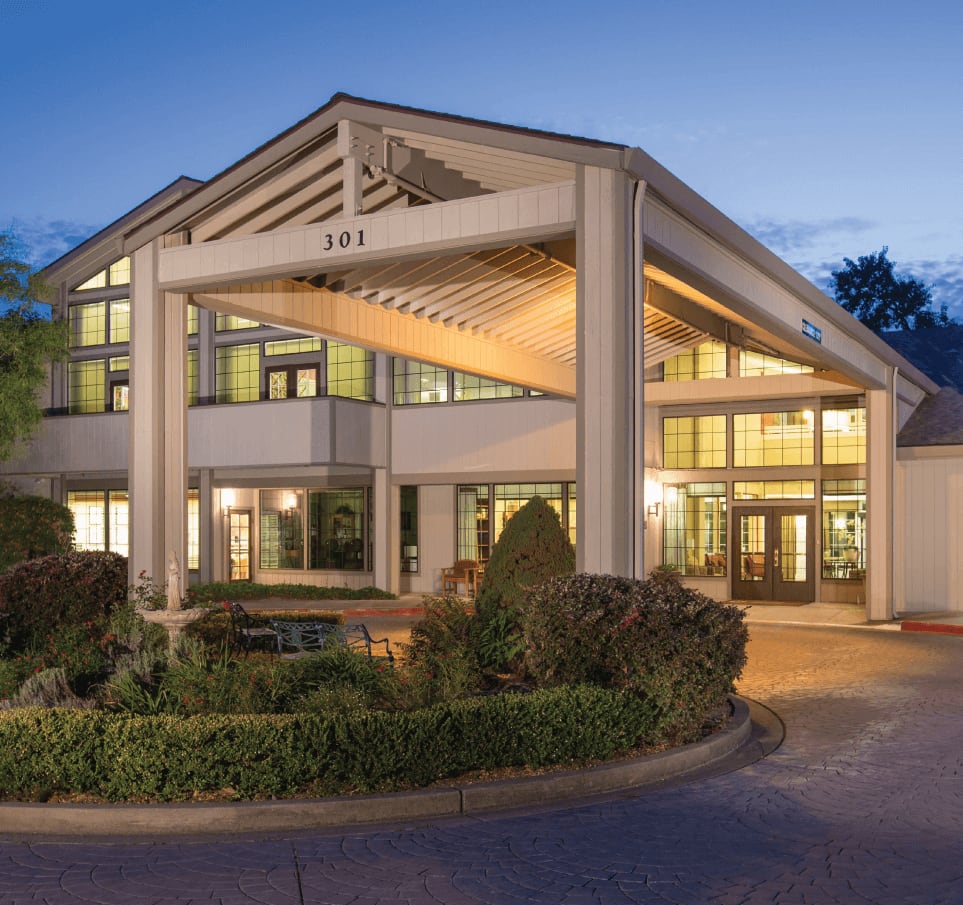
- Enso Village (Healdsburg): a life plan community for adults 60 and up, with independent living, assisted living, and memory care on one campus.
- Petaluma: typical homes in the high $800s to low $900s, with SMART train and ferry access to San Francisco.
- Sebastopol: typical homes around $1 million to the low $1.1 million, with an arts-first lifestyle.
- Healdsburg: typical homes $1.1 to $1.3 million, Walker's Paradise around the Plaza.
How California taxes retirement income
California has a reputation for making retirement expensive, but it treats Social Security very differently. The state doesn't tax Social Security at all, whether the benefits are for retirement, survivors, or disability, regardless of how much you receive. If Social Security makes up a big share of your income, your state tax bill can be surprisingly small, even here.
Everything else is a different story. Pensions, IRA withdrawals, and 401(k) distributions are taxed as ordinary income on a scale that climbs as high as 13.3%. So two couples with the same total income can face very different tax bills, depending on where that income comes from.
If you retire early, watch for one more hit. Take money from a retirement plan, annuity, or IRA before age 59 1/2 and California can add its own 2.5% penalty on top of the federal one. Run the numbers with your tax advisor before you touch those accounts.
Prop 19: the rule that makes the move pencil out
If you're 55 or older, Prop 19 lets you take your current property tax base with you when you buy a new primary home anywhere in California. If you've owned your Bay Area home for decades, your tax bill is probably still based on what you paid back then. Under Prop 19, you carry that lower base to Sonoma County instead of starting over at today's prices.
The key details:
- You have two years on either side of the sale to buy the new home.
- You can use it up to three times in your lifetime.
- It works even if you buy a more expensive home; the price difference is added on top of your existing base, which is usually far less than a full reassessment.
For a long-time California homeowner, that can be worth thousands of dollars a year.
If Prop 19 doesn't apply to you, Sonoma County property taxes start at 1% of your purchase price plus local bonds, which puts most homeowners at about 1.15-1.2% effective. On a $900,000 home, that's roughly $10,350 to $10,800 a year. After purchase, your assessed value can rise only a little each year, and on a fixed income that predictability makes budgeting easier.
Get an insurance quote early
The other number to have before you get serious about a property is the insurance bill. Wildfire risk can push premiums higher across much of the county, so get a quote before you fall in love with a house. Our guide to home insurance in California explains what's driving costs and how buyers are handling it.
Sonoma County 55+ communities: from golf to Zen
Oakmont, Santa Rosa
Oakmont is still the name everyone knows and the most established traditional retirement community in the area. Tucked at the head of the Valley of the Moon on Santa Rosa's east side, it feels like its own small town. A normal Saturday might mean a morning hike in Trione-Annadel State Park, an afternoon by the pool, and a concert at the Berger Center that night.
Golf sets the rhythm. The two courses now carry the Valley of the Moon Club name, with a full-length course and a shorter executive course winding through the neighborhoods. Oakmont homes have been selling from the high $600s into the $800s, with golf-view homes at the top of that range. For Wine Country, that's a reasonable way into a full-amenity lifestyle.
The trade-off is the car. Oakmont barely registers on Walk Score, so groceries, doctor's appointments, and dinners out mean driving. Kaiser Permanente and Sutter in Santa Rosa are a short drive away. Keep an eye on the Berger Center renovation too; the association has reset its approach, and a project like that can shape future HOA costs.
Enso Village and The Hudson, Healdsburg
At the other end of the spectrum, the market is shifting toward high-end, specialized retirement living. Enso Village in Healdsburg is the clearest example: a Zen-inspired life plan community built by the San Francisco Zen Center and Kendal, a senior living provider founded on Quaker principles. It's for adults 60 and up, with independent living, assisted living, and memory care on one campus. Enso was designed to be woven into town, with a community farm and an art studio open to local residents. Pricing isn't published, so contact Enso directly if it interests you.
Healdsburg has more on the way. The Hudson would add luxury senior apartments and memory care near the town's future SMART station, from the developer behind Varenna in Santa Rosa and Morella in Petaluma. The Planning Commission approved the project this summer, but neighbors appealed that decision to the City Council, so it still has a step to clear.
Healdsburg also has a lower-cost option: its 55+ neighborhoods of single-story homes along the Russian River, about a mile from the Plaza. Three sections, River Bend, Riverside, and Riverview, each have their own HOA, clubhouse, and pool, plus gated access down to the river.
Brooks Creek and Windsor Mobile Country Club, Windsor
If those options feel out of reach, Windsor is where budget-friendly choices show up. Brooks Creek is a small 55+ neighborhood of single-level ranch homes, and listings there often point out that there are no HOA dues. You can walk to the Windsor Senior Center, shops, and restaurants.
For the tightest budgets, Windsor Mobile Country Club has manufactured homes listed from the high $100s to the mid $400s, with a heated pool, a clubhouse, and a busy social calendar. Add Windsor's new SMART station and the events on the Windsor Town Green, and it's a quieter, practical pick with more going on than people expect. If it's on your list, here's what to know about buying a home in Windsor.
Temelec, Sonoma
Just outside the City of Sonoma, Temelec is a charming 55+ community of mid-century homes centered on a historic mansion from the mid-1800s that now serves as the clubhouse. You get a pool, vineyard views, and walking trails, with Sonoma Plaza, the largest plaza of its kind in California, about ten minutes away. Current Temelec listings run from the mid $600s to the low $800s, and Sonoma Valley Hospital, with its UCSF affiliation, is close by.
Petaluma: the budget-conscious entry point, with an asterisk
Petaluma suits the retiree who wants Sonoma County but still wants San Francisco within easy reach. Typical homes sit in the high $800s to low $900s, and prices have stayed fairly flat over the past year.
The asterisk: Petaluma isn't the cheapest address in the county. Santa Rosa and Rohnert Park both come in lower, so here you're paying for location and character. Across town, prices run from the high $600s to past $1 million. Many people assume the east side is the bargain, but those neighborhoods typically sit in the $800s.
What you get is one of the best historic downtowns in Northern California. Petaluma came through the 1906 San Francisco earthquake largely intact, so downtown still has some of the finest iron-front architecture in the country. A slow morning here means coffee along the river, antique shops in old bank buildings, and a stroll past the Victorians on 5th and 6th Streets.
Getting to the city is easy. Petaluma has two SMART stations, and the line runs to Larkspur, where you can catch the ferry into San Francisco. Seniors 65 and up ride SMART free. Petaluma Valley Hospital is in town, with Santa Rosa's larger systems up the freeway.
The trade-off is weather. Petaluma sits in the Petaluma Gap, an opening in the coastal hills that funnels ocean wind and fog inland; it was named an official wine region because of those conditions. Expect warm afternoons, a breeze that picks up later in the day, and evening fog. You'll want a jacket for patio dinners more nights than not, which is either a dealbreaker or a relief.
Sebastopol: the walkable creative hub
Sebastopol turns an ordinary Wednesday into something that feels like a weekend: a pottery class, lunch from a local maker, then a free Peacetown concert under the redwoods at Ives Park. It's the county's bohemian, artistic hub, with deep roots in organic farming.
The Barlow, a former apple-packing plant turned open-air marketplace, has tasting rooms, coffee, craft spirits, and makers' studios within a few easy blocks, and its outdoor makers' markets feel like a neighborhood block party. Add concerts in the plaza, open artist studios, and the whimsical metal sculptures in front yards along Florence Avenue, and the retirees who thrive here tend to trade country club living for classes and galleries.
For staying active, Ragle Ranch Regional Park sits on the edge of town, and west county's orchards and back roads are made for slow drives. Sebastopol is closer to the coast, so summers feel softer and greener than in Healdsburg.
Typical homes land around $1 million to the low $1.1 million, with in-town cottages often below that range and farmhouses with land well above it. The market has been fairly balanced, which gives buyers room to negotiate. Some parts of town sit low, so check flood exposure as part of your due diligence, and pay attention to microclimate; neighborhoods only a mile apart can feel very different on a summer evening.
Healdsburg: the premium complete package
I've lived in Healdsburg for over a decade, and I've watched it become one of the most complete retirement options in Northern California.
Homes right around the Plaza score as a Walker's Paradise on Walk Score, so groceries, coffee, the pharmacy, and dinner reservations can all be on foot. For aging in place, that lets you stay independent longer, even if driving gets harder. Walkability is a downtown feature, though; toward the edges of town you're back in the car fast. If walking is your priority, keep your search within a few blocks of the Plaza.
The Plaza is where life happens. Summer Tuesday evenings bring free concerts with local food vendors, Sunday afternoon music draws a calmer picnic-on-a-blanket crowd, and the Saturday farmers market fills the morning with produce, bread, cheese, and flowers. SingleThread, with three Michelin stars, is here, along with a long list of acclaimed restaurants, and Dry Creek and Alexander Valley sit at your doorstep.
The typical Healdsburg home trades between $1.1 and $1.3 million, with listings often asking more. Downtown craftsman homes near the Plaza typically start around $1.4 million, and vineyard estates in the valleys push well past $2 million.
Here's where Prop 19 shows up clearly. In recent sales, roughly two-thirds of Healdsburg buyers paid cash. Cash usually means equity from a home you've already sold, and if you're 55 or older, Prop 19 can keep your new property tax bill from starting over. Cash buyers also sidestep today's borrowing costs, which remain well above the rates many Bay Area owners locked in years ago.
The market feels balanced right now: sellers still see strong prices, but buyers have time to look without the frenzy of a few years ago. The trade-offs are summer heat and busy harvest weekends, when the Plaza fills with visitors and errands go faster early in the day. Underneath that, Healdsburg is a real town where people live year-round.
Add Enso Village, The Hudson, and the SMART extension to Healdsburg targeted for 2028, and you have a town that works in the early years of retirement and still makes sense as your needs change. Our guide to retiring to Healdsburg goes deeper on neighborhoods and day-to-day life, and our ranking of the best retirement towns in Sonoma County compares five towns side by side.
Planning a 2027 move and want to see how Prop 19 and today's prices play out in the town that fits your life? Email me at david@bruingtonhargreaves.com and I'll walk through your numbers town by town.
About the Author
David Hargreaves is the co-founder of BruingtonHargreaves, one of Sonoma County's top-ranked real estate teams and part of W Real Estate. Originally from the UK and an Oxford University graduate, David built and ran a digital marketing agency serving Google, Facebook, and other major brands before becoming one of Sonoma County's top agents within three years of entering real estate.
Today he and business partner Jonathan Bruington sold $77.2m in Sonoma County homes across 62 transactions in 2025, earning recognition from RealTrends as the No. 1 team in Healdsburg and the No. 2 team in Sonoma County. David specialises in helping Bay Area buyers and sellers with luxury properties and vacation rentals across Healdsburg, Windsor, Santa Rosa, and the Russian River communities.
He lives in Sonoma County with his wife Nancy and is happiest cycling the back roads, exploring local wineries, or behind a camera. Have a question about buying, selling, or building in Wine Country? Book a free call.