
The Sonoma County luxury real estate market has pulled away from the rest of the county. Sales of homes priced above $3 million rose more than 50% through the second quarter of 2026, the luxury absorption rate doubled, and the median luxury price climbed about 22% in a year. Meanwhile, the countywide median barely moved. The timing, the buyer profile and the part of the market that is moving all point to the same source: private stock wealth from San Francisco's AI companies.
We have even had a Healdsburg seller offer to accept $2 million in Anthropic stock instead of cash. Here is the data behind the trend, where the money is landing, and what it means if you are buying or selling above $3 million.
The San Francisco AI wealth explosion
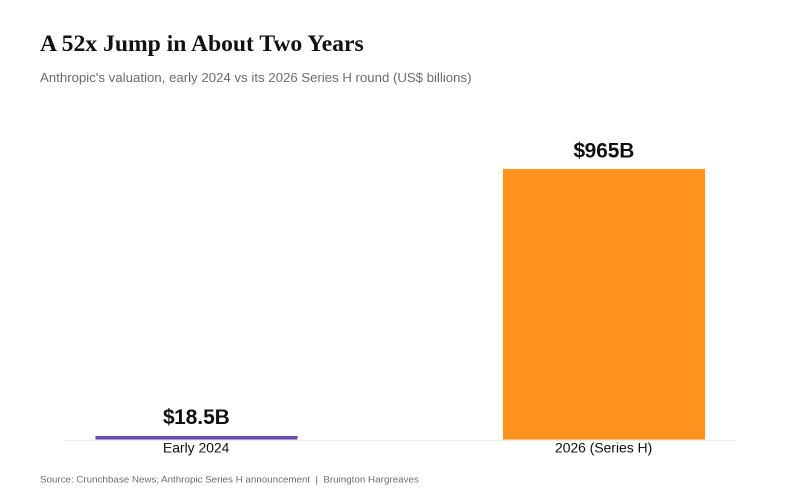
In early 2024, Anthropic was valued at about $18.5 billion. After its Series H round in 2026, it sits at roughly $965 billion, a 52x jump in about two years.
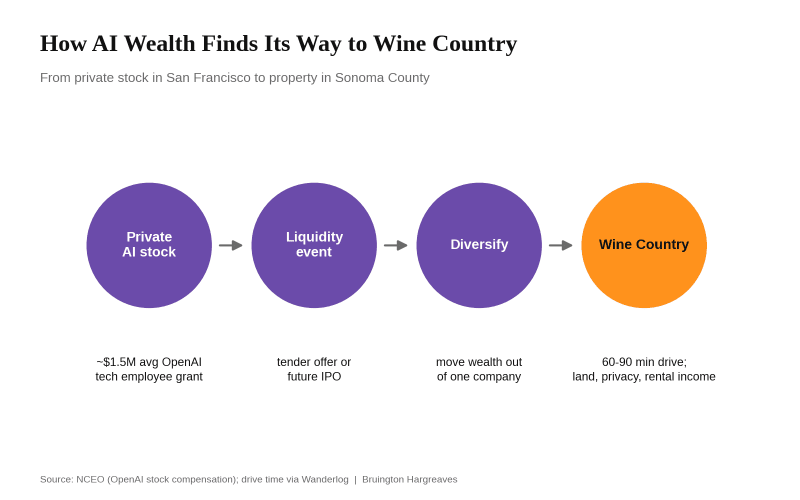
The wealth is not limited to founders. The average technical employee at OpenAI now receives about $1.5 million in stock compensation, more than seven times what Google employees received when that company went public in 2004. That means thousands of engineers hold seven-figure wealth on paper.
Almost none of it is cash. It sits in private company stock, waiting for a tender offer or an IPO. I saw the same pattern in the dot-com years: right before shares turn into cash, people start planning where to put the money so it is not all riding on one company. Real estate is usually near the top of the list, and most of these buyers want to stay close to the Bay Area.
Why the money leaves the city
This spring, San Francisco's median home price topped $1.5 million, up in the mid-to-high teens from a year earlier. For someone holding $10 million or $20 million in stock, the city stops offering anything new. They can afford another condo. They want land, privacy and open space instead.
This is a small group compared with past tech booms: founders, early employees and staff at a handful of AI companies. But it controls an enormous amount of capital, and a small group with big money moves the top of a market first.
Sonoma County is the natural pressure valve. It sits 60 to 90 minutes north of San Francisco depending on traffic, close enough for weekends and close enough to head back when work calls. Around $10 million in Sonoma or Napa can buy a vineyard estate spanning dozens of acres. The same money in much of the Bay Area buys a fraction of one acre.
The data: the luxury tier woke up
Most of the county has been steady. The top tier has not.
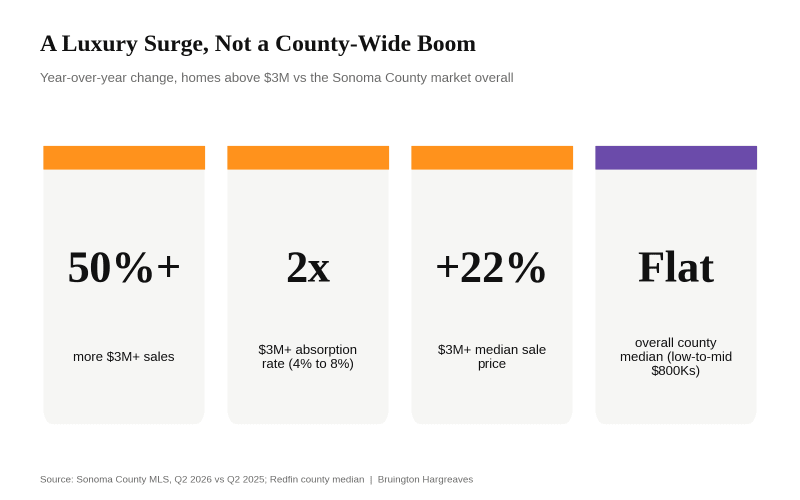
Sales of homes above $3 million rose more than 50% year over year through Q2. The absorption rate, which measures how quickly homes sell against what is on the market, doubled from about 4% to about 8% in 12 months.
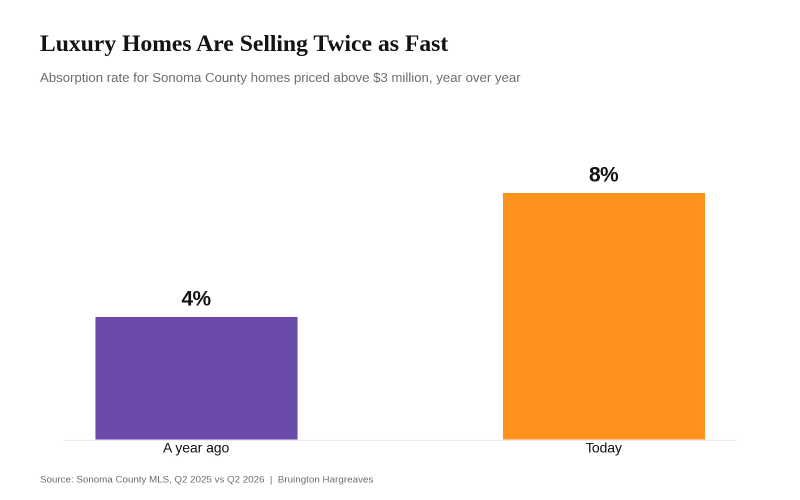
You would normally expect more sellers to list when luxury demand rises. That did not happen. Countywide inventory tightened over the same period, so more buyers competed for fewer homes, and prices followed. The median luxury sale price rose from the mid-to-high $3 millions to around the mid-$4 millions, up roughly 22%, one of the biggest one-year jumps this tier has seen.
The overall Sonoma County median stayed in the low-to-mid $800,000s and was essentially flat. This is not a county-wide boom. It is a luxury-tier story, which is exactly where you would expect a small, very wealthy group of buyers to show up first.
Healdsburg and Sonoma lead the way
Buyers are not spreading evenly across the county. Healdsburg has the strongest name recognition with Bay Area buyers, from the historic Plaza to three-Michelin-star SingleThread, and demand showed up there first.
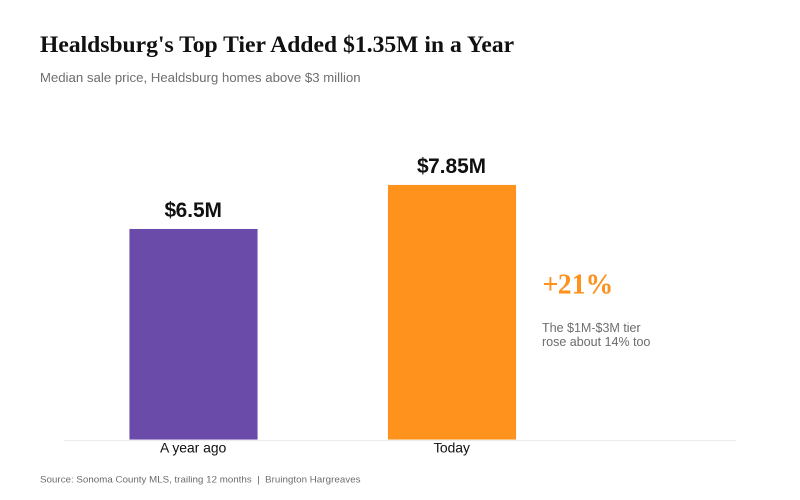
The median price of a Healdsburg home above $3 million climbed from about $6.5 million to nearly $7.85 million in one year, a gain of roughly $1.35 million. Demand is spilling into the next tier as well: the $1 million to $3 million median rose about 14%. If you are weighing buying a home in Healdsburg, those two numbers tell you the pressure runs deeper than trophy estates.
Sonoma (the city, not the county) is seeing an even sharper jump, helped by rental income. Vacation rentals there run at about 75% occupancy, the highest in the county. Buyers who cannot find the right home in either town are moving into northeast Santa Rosa: Riebli Valley, Larkfield-Wikiup and the edges of Fountaingrove, where lots are larger and privacy is easier to find. Our guide to where wealthy buyers are concentrating covers each of these neighborhoods.
The Anthropic stock offer on Eastside Road
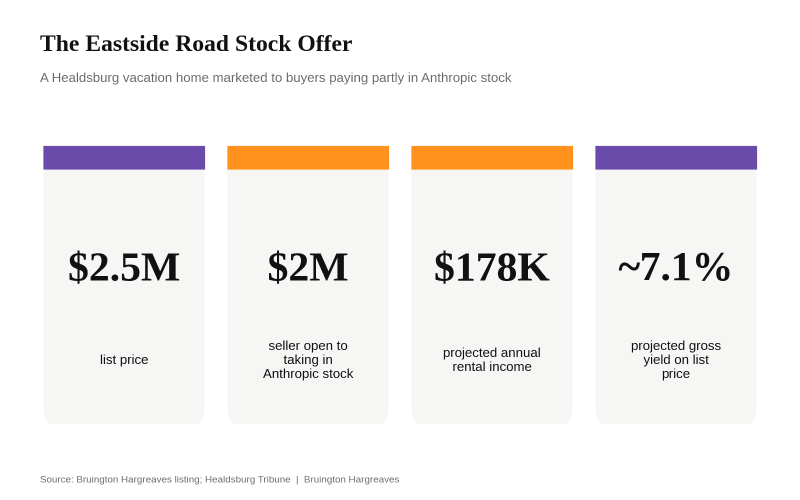
This was the first deal of its kind we had seen in Sonoma County. We listed a vacation home on Eastside Road near Healdsburg for $2.5 million, and the owner was open to accepting $2 million in Anthropic stock instead.
It is not alone. Sellers in Mill Valley and San Francisco have also marketed homes to buyers holding OpenAI or Anthropic shares. None of these deals has closed yet, and when one does, it will probably be a mix of cash and stock. There are three reasons:
- Anthropic and OpenAI must approve transfers of private shares, so the company becomes part of the transaction.
- The seller can face tax consequences on the stock they receive.
- California title companies are still working out how to close these deals.
Buyers keep making the offers anyway. Many hold millions in private stock but little cash, and selling shares first can trigger a tax bill before they buy anything. The Eastside Road property is a turnkey vacation rental projected to earn about $178,000 a year, roughly a 7.1% gross yield on the list price, so the buyer gets a home to enjoy and income when they are away.
The scarcity factor
Many of these buyers want a luxury home they can also rent out. That is where supply gets very thin.
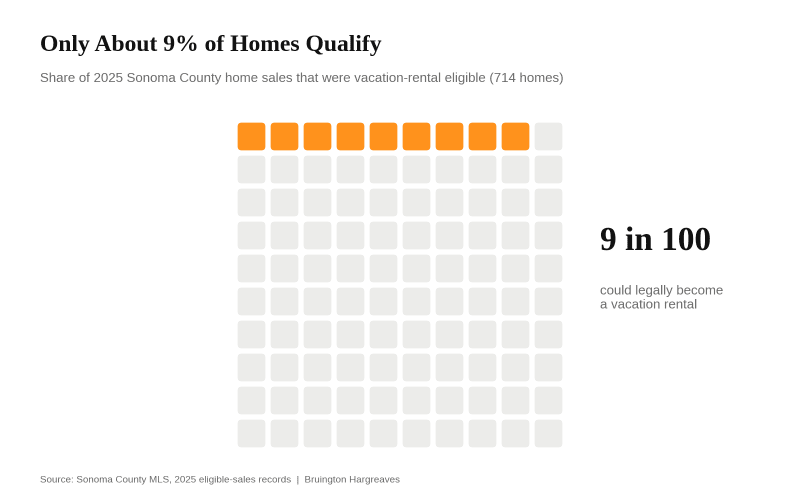
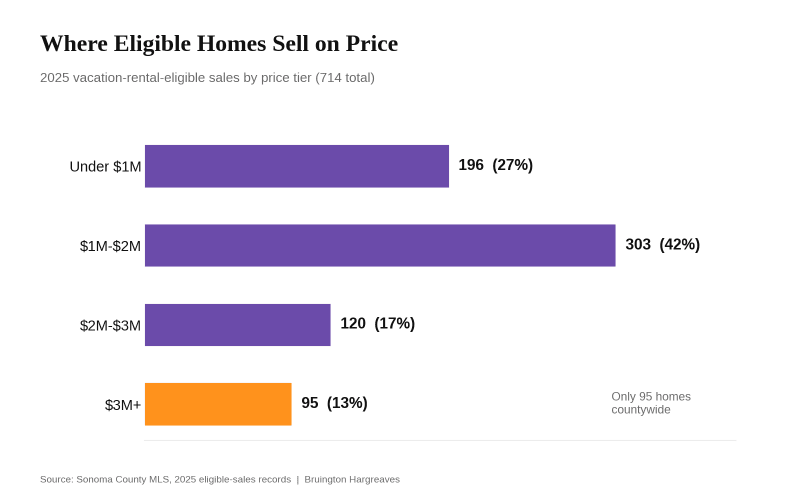
Across Sonoma County, only 714 vacation-rental-eligible homes sold or went under contract in 2025, about 9% of all residential sales. Only 95 of those were priced above $3 million.
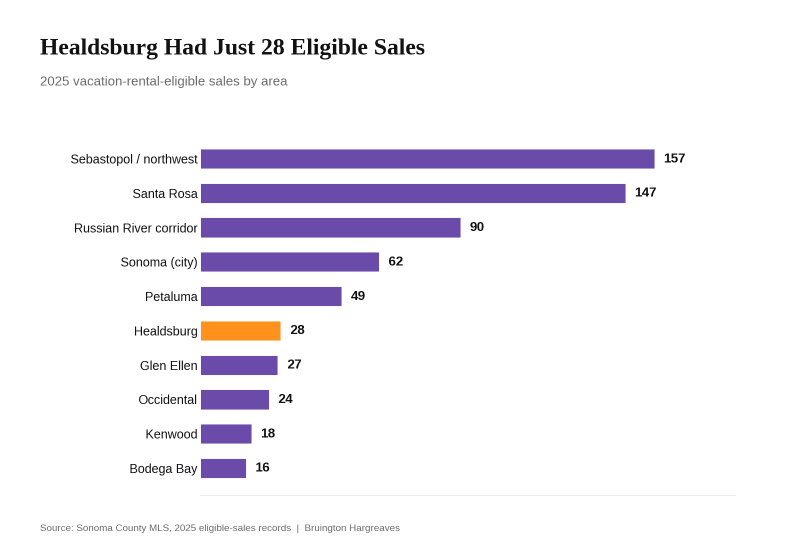
Healdsburg had just 28 eligible sales all year.
Inside city limits, the options are close to zero. Healdsburg, Sonoma and Windsor do not issue new vacation rental permits for single-family homes, and Santa Rosa's spacing rules have effectively closed it too. Since the county tightened its rules in 2023, many areas around Healdsburg have hit their permit caps, so no new permits are being issued there. Our breakdown of which towns still allow vacation rentals and Sonoma County's rental rules walks through the details.
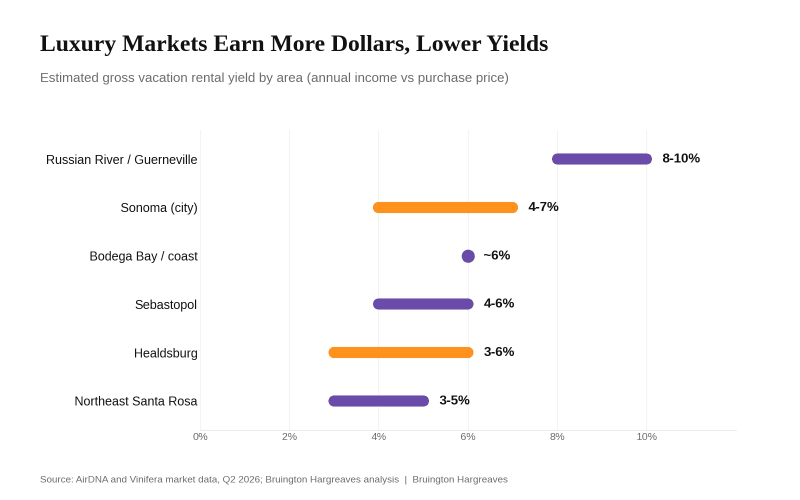
Income expectations vary a lot by location. Luxury markets bring in more dollars but lower yields, while the Russian River delivers the highest yields at the lowest prices.
More AI employees can decide they want a place in Wine Country at any time. The number of homes that fit what they want does not change. When demand grows against a fixed supply, prices tend to stay strong even while the rest of the county stays steady.
What buyers and sellers should do now
If you are selling above $3 million, your buyer may not be a local. They may be coming from the Bay Area with most of their wealth tied up in one AI company. Stay open to flexible timing or a creative structure if the right buyer appears. Most deals will still be traditional purchases, but this market is producing situations we did not see a few years ago.
If you are buying, ignore the countywide median. The luxury tier and the rental-eligible market move on their own terms. Pay close attention to homes that already qualify for a vacation rental permit where permits are still allowed, because they make up a small slice of the market and rarely come up. If one fits, waiting usually means fewer options or more competition. When you are ready to start buying a vacation rental in Sonoma County, you can sign up to see our current list of eligible homes.
Keep an eye on the AI companies themselves. OpenAI and Anthropic have both let some employees sell shares early, and OpenAI has taken first steps toward an IPO, though recent reports suggest it may not happen until 2027. Each new liquidity event could send another wave of buyers north into the same limited supply.
Five years ago, nobody was buying Wine Country real estate with private company stock. Today, those offers are on the table, and they show where the top of this market is heading.
Holding equity in an AI company and wondering what it could buy in Wine Country? Email me directly at david@bruingtonhargreaves.com and I will put together a shortlist that fits your goals.
About the Author
David Hargreaves is the co-founder of BruingtonHargreaves, one of Sonoma County's top-ranked real estate teams and part of W Real Estate. Originally from the UK and an Oxford University graduate, David built and ran a digital marketing agency serving Google, Facebook, and other major brands before becoming one of Sonoma County's top agents within three years of entering real estate.
Today he and business partner Jonathan Bruington have sold more than $250 million in Sonoma County homes over the past three years, earning recognition as a RealTrends No. 2 team in the county and the No. 1 team in Healdsburg. David specialises in helping Bay Area buyers and sellers with luxury properties and vacation rentals across Healdsburg, Windsor, Santa Rosa, and the Russian River communities.
He lives in Sonoma County with his wife Nancy and is happiest cycling the back roads, exploring local wineries, or behind a camera. Have a question about buying, selling, or building in Wine Country? Book a free call.