
Disclosure: BruingtonHargreaves may earn a referral fee if you order a study through the Unlevered links in this post. We are real estate agents, not CPAs, and Unlevered Inc. is not a CPA firm. Nothing here is tax advice. Confirm your own situation with your tax advisor.
A cost segregation study can turn a short-term rental into one of the largest tax deductions most Bay Area professionals will ever see. On a Santa Rosa vacation rental bought in June 2026 for $1,724,600, a study produced a $736,050 federal deduction in year one, and up to $512,000 of it can offset the owners' W-2 income in 2026. Below is exactly how that number was built, step by step, plus the rules you have to meet and the mistakes that cost owners the deduction.
To get the detail right, I sat down with Bola Akinsanya, founder of Unlevered, a geospatial cost segregation platform. Bola spent more than 11.5 years at Airbnb building vetting and revenue systems, and she hosts her own rentals at The Sea Ranch and on Cape Cod. Her words are quoted throughout.
Key takeaways
- A cost segregation study splits a property into land (never depreciates) and parts that wear out on 5-, 15- and 39-year schedules.
- Since the One Big Beautiful Bill Act, property acquired after January 19, 2025 gets 100% bonus depreciation on the 5- and 15-year parts. That is federal only; California does not follow it.
- A short-term rental with an average guest stay of 7 days or less, where you materially participate, can use that deduction against W-2 income.
- In 2026, joint filers can offset up to $512,000 of wages with business losses. The rest carries forward.
- In Sonoma County, landscaping, pools, wells and site work are often the biggest part of the deduction, bigger than everything inside the house.
- The land split matters more than anything else. On our Santa Rosa example, the assessor said 72.9% land; comparable lot sales said 23.9%.
If you own or are buying a vacation rental and want to see what a study would find on your house, start with Unlevered here: Get a cost segregation estimate from Unlevered.
What a cost segregation study does
A cost segregation study does three things. It separates the land, which never wears out, from the building. It categorizes every part of the property by how fast it wears out. Then it prices each part at what it would cost to put in today.
"You will replace your appliances long before you replace your foundation," Bola says. "The tax code has a classification system built around that: 5, 7 and 15 years for the parts that wear out faster, and with bonus depreciation you can take those parts as an immediate expense."
Without a study, a vacation rental is depreciated as one lump over 39 years. With one, the appliances, finishes, pool, landscaping and site work move into faster classes, and under current federal law most of that comes off your taxes in the first year.
Why it matters more for a short-term rental
A short-term rental is a small hospitality business, and the tax code treats it that way. When the average guest stay is 7 days or less and you materially participate, the losses from that business are not trapped as passive losses. They can offset your salary. This is what people call the short-term rental tax loophole.
"People forget that," Bola says. "You are running a small hospitality business. If you manage it yourself, it is a second job, but one you can do alongside your W-2."
That is why the strategy fits so many of our clients: Bay Area professionals buying a second home or an income property in Healdsburg, Guerneville, Sebastopol or Santa Rosa. If that is you, our guide to buying a vacation rental in Sonoma County covers which properties can legally be rented short term, which is the first box to tick.
What the One Big Beautiful Bill Act changed
Bonus depreciation was 100% from 2017, then phased down: 80% in 2023, 60% in 2024 and 40% in 2025. The One Big Beautiful Bill Act made 100% permanent for property acquired after January 19, 2025.
The trap is the acquisition date. "People say, 'I bought it in 2020 but didn't rent it until 2026,'" Bola says. "The law goes by when you acquired it, not when you started renting. That house stays on the old phase-down, which is 20% in 2026."
Worked example: a $1.72 million Santa Rosa vacation rental, step by step
This is a real study on a real Santa Rosa house, shared with the owners' consent. Figures are from the accepted study dated October 19, 2026.
Step 1: The property and the evidence
- Purchase price: $1,724,600, closed June 2026
- Ready for guests: October 1, 2026
- Main house: 3,363 square feet, plus a 468-square-foot pool house
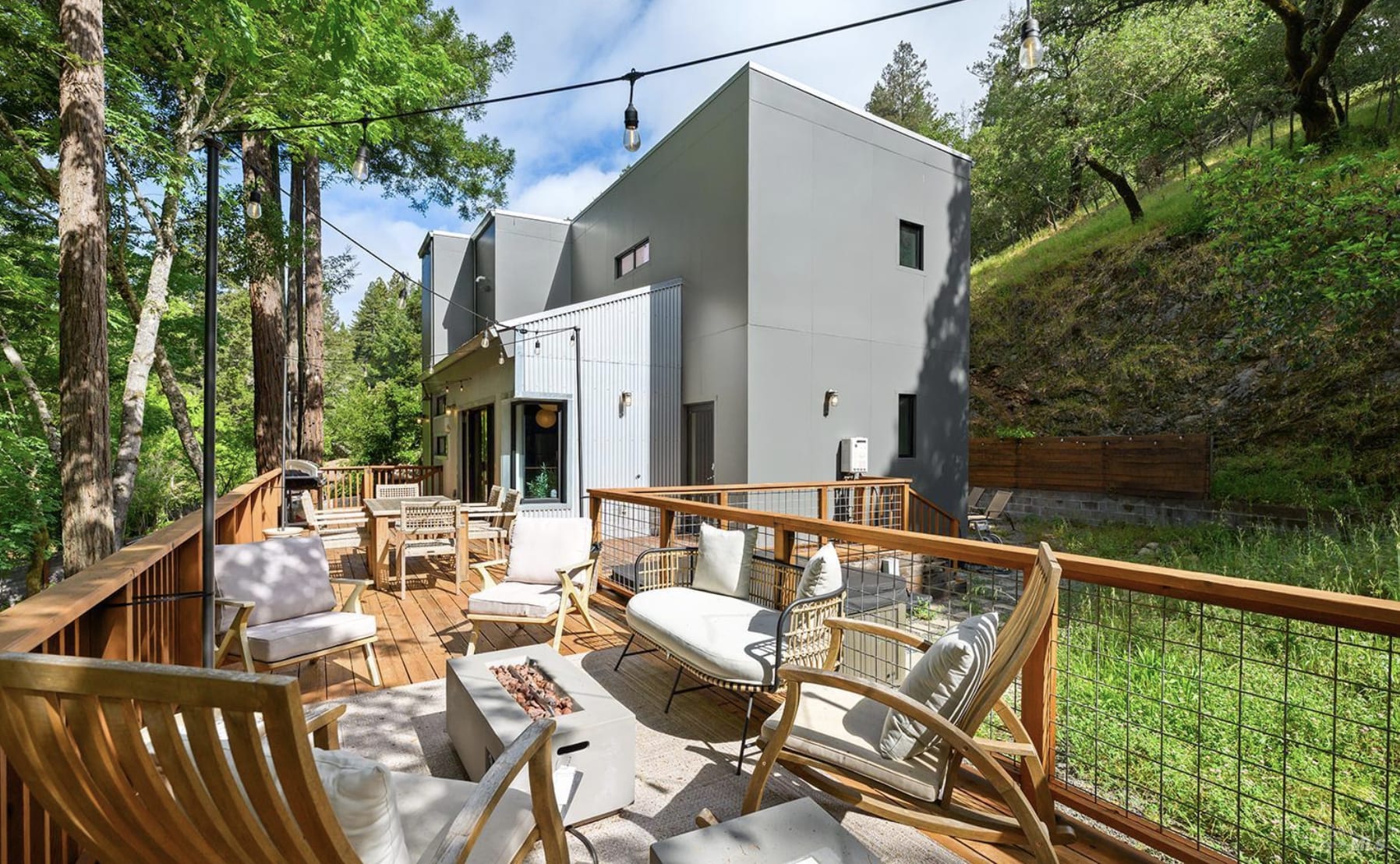
- Pool, mature landscaping, a well and a septic system on a large lot
From the public record alone, Unlevered pulled 99 documents: 83 listing photos, the floor plan, 14 county permits, the deed and an aerial. It rebuilt 31 rooms in 3D and itemized 1,162 lines.
It also flagged what did not fit. The assessor put land at 72.9% of the value, far above any nearby lot sale. One source listed the house as one story; it has two. The pool depth was not on record.
Step 2: Separate the land
This is the biggest single decision in the study, because every dollar called land is a dollar you can never depreciate.
- The county assessor's split: 72.9% land
- Comparable vacant lot sales nearby: 23.9% land
- The study used a nearby vacant lot with well, septic and power that sold in November 2024 at $15.92 per square foot
- Land in the study: $411,778
California's Proposition 13 keeps assessed values years behind the market, so the assessor's split is a starting point, not an answer. To show the stakes, here is my own arithmetic on the purchase price: at the assessor's 72.9%, land would be about $1,257,000 and the depreciable basis would drop to roughly $488,000. That is about $845,000 of basis gone before a single part is counted.
This matters across Sonoma County. In Healdsburg, the Dry Creek Valley and anywhere with vineyard views, land is a big share of the price, so how the land is valued can make or break a study. If you are buying a home in Healdsburg as a rental, ask how land will be valued before you assume the deduction.
Step 3: Categorize every part
Each of the 1,162 lines gets a class:
- 5-year: appliances and removable finishes (range, wall oven, refrigerators, floating floors and similar)
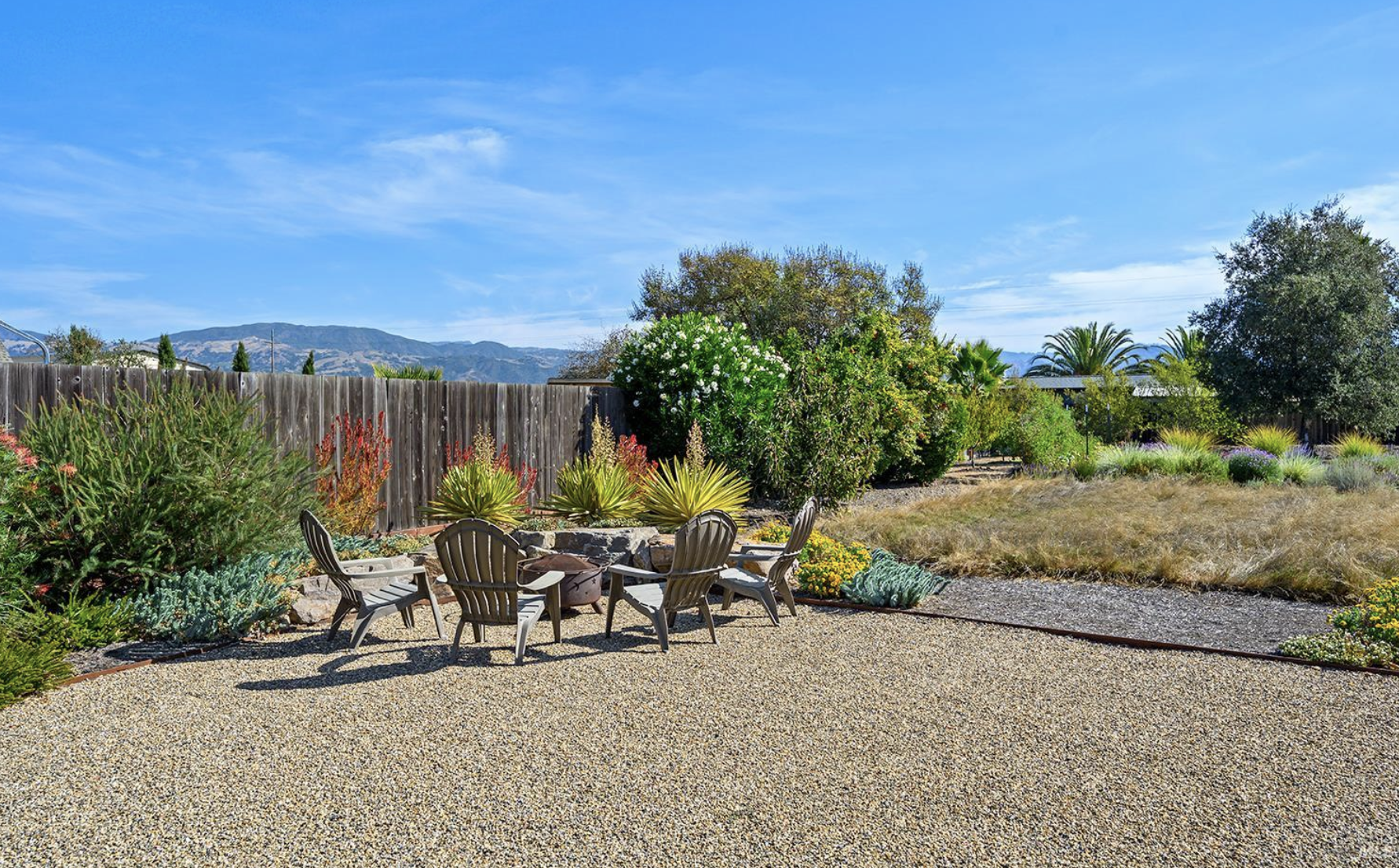
- 15-year: land improvements (pool, deck, lawns, planted beds, trees someone planted, irrigation, fences, paths, driveway, the well)
- 39-year: the structure (framing, roof, walls, foundation, the septic system)
Because the house is rented mostly to transient guests, it is treated as 39-year nonresidential property, not 27.5-year residential. Speakers, TVs and furniture sit in a separate furnishings inventory.
Bola draws a sharp line between land and what was added to it. "Your soil is land, and so are the oaks that grew there on their own. But the rhododendron you paid $300 to plant by the front door is not land. It's site work." In this study, the planted camellias and azaleas are 15-year lines; the native redwood and valley oak are land, with no line at all.
Step 4: Price each part
Each part is priced at what it would cost to install today, from the record: receipts where they exist, then retail prices and construction cost references like RSMeans. What the buyers paid above the itemized total is called the Purchase Premium and is spread across the 5-, 15- and 39-year classes in proportion to each class's itemized cost.
Step 5: The basis, by class
- Purchase price: $1,724,600
- Plus costs added at purchase: $20,731
- Total basis: $1,745,331
- Less land: $411,778
- Depreciable basis: $1,333,553
Split by class:
- 5-year: $121,551 (9.1%)
- 15-year: $611,291 (45.8%)
- 39-year: $600,711 (45.0%)
The 15-year class breaks down like this:
- Pool, pool deck and equipment: $245,723
- Lawns, planted beds, trees and irrigation: $138,500
- Fences, decks, paths, courtyard and driveway: $63,225
- The well: $9,831
- Purchase Premium, 15-year share: $154,012
Step 6: The year-one deduction
- 5-year parts, 100% bonus: $121,551
- 15-year parts, 100% bonus: $611,291
- 39-year structure, regular first-year depreciation (placed in service October): $3,208
- Year-one federal deduction: $736,050
Step 7: Apply the excess business loss cap
The deduction itself has no cap. What is capped is how much business loss can offset wages in one year: $512,000 for married couples filing jointly in 2026, and $256,000 for everyone else.
- Usable against wages in 2026: $512,000
- Carried forward to 2027 and beyond: about $224,050
Nothing is lost. The carryforward reduces taxable income in later years. These figures are simplified and leave out the rental's own income and expenses.
Step 8: What it means in tax dollars
For a married couple in the 37% federal bracket, $512,000 of deductions against wages is up to about $189,440 less federal tax in 2026, if all of it would have been taxed at 37%.
Step 9: Same house, three ways to calculate it
- Version A, percentage-based benchmark using industry averages: $134,649
- Version B, itemized with every part priced: $569,923 (plus $435,274)
- Version C, itemized plus the property algorithm, delivered: $736,050 (plus $166,127)
Version C was the accepted study, chosen after replaying 96 combinations of supportable methods. The gap between A and C is $601,401 of first-year deductions on the same house with the same evidence.
If you closed on a vacation rental this year, or are about to, see what an itemized study finds on your property: Start your cost segregation study with Unlevered.
The sleeper hit: landscaping and site work
On this house, the outdoor work alone came to $457,279 before the premium, nearly four times every appliance and removable finish inside. With the premium, the 15-year class reached $611,291.
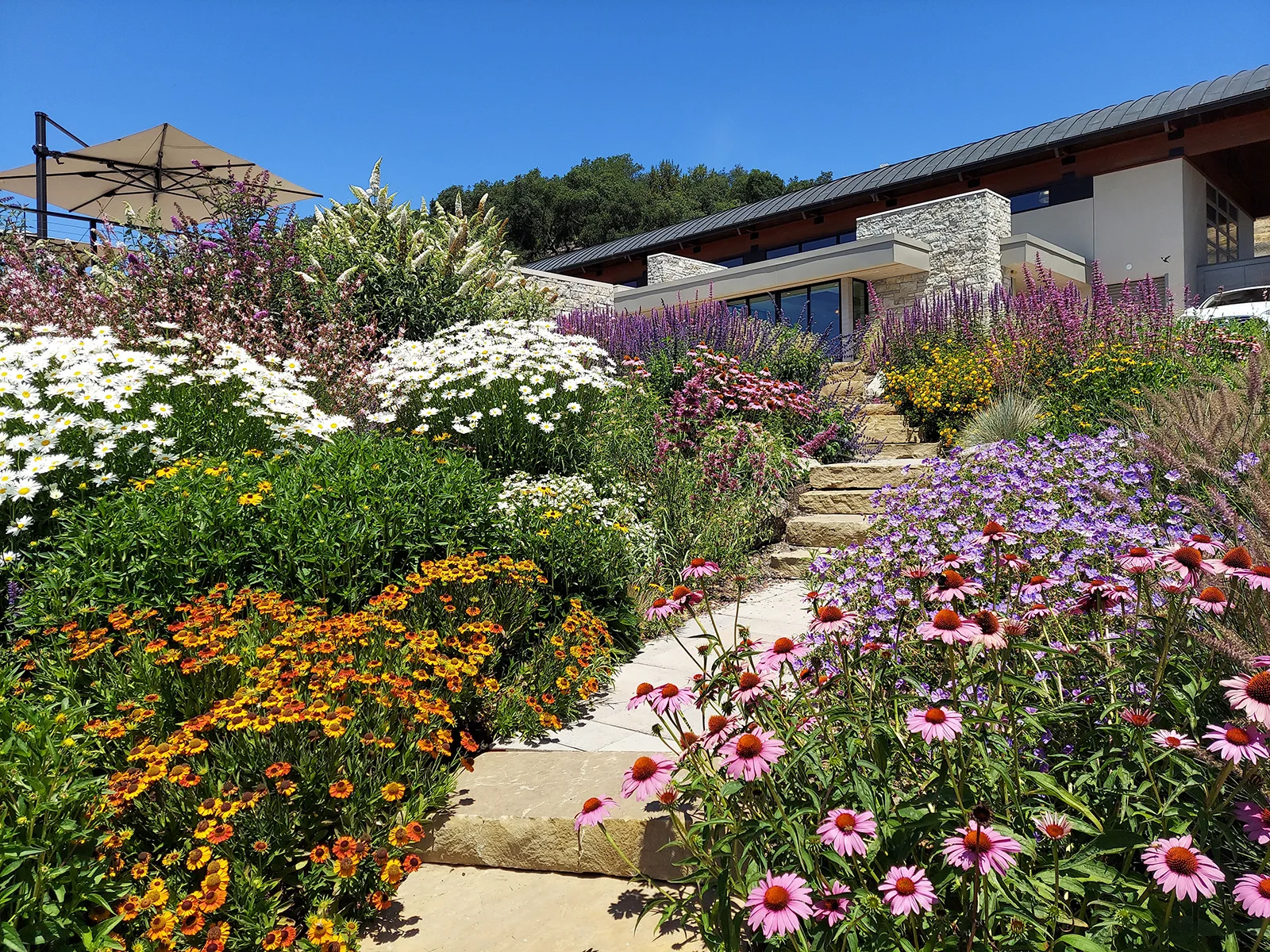
"I always say buy the house with the pool, buy the house with the garden," Bola says. "It's all accelerated right away, and updating it is what guests love and what books."
This is where Sonoma County properties shine. Rural and semi-rural homes here often come with wells, long driveways, decks, fencing, irrigation and planted gardens, all of which can be 15-year property. The septic system is the exception: it sits in the 39-year building class. If you are weighing a rural property, our guide to the septic system and well side of rural ownership is worth a read.
Depreciable, brought in by someone:
- A pool, hot tub, deck or patio
- Trees, shrubs and lawns someone planted
- Irrigation, landscape lighting, fences and paths
- A well
Part of the land, not depreciable:
- The soil, the ground and the view
- Oaks that grew there on their own
- Clearing and grading that permanently changed the land
Itemizing also catches what a top-down study misses. One of Bola's investors owns a home in Healdsburg with a barrel sauna, a plug-in hot tub and a gym in an ADU. A traditional firm put all three in the 39-year building. Itemized, the sauna and hot tub moved to personal property, which is depreciated far faster.
Federal versus California: what Bay Area buyers should expect
California does not follow federal bonus depreciation, so the big first-year number is federal only. The study still pays on your state return, because the parts are depreciated over 5 and 15 years instead of 39.
Illustrative, $500,000 of parts ($100,000 of 5-year and $400,000 of 15-year):
- Without a study, everything over 39 years: $12,821 a year, federal and California
- With a study, federal: $500,000 in year one
- With a study, California: $46,667 a year ($100,000 divided by 5, plus $400,000 divided by 15), more than 3.5 times the deduction
Unlevered's illustration, at 2025 rates for a married couple with $1 million of income: about $173,618 less federal tax in year one and about $3,825 less California tax each year than without a study. These are shown on a straight line to keep it simple; actual schedules front-load more.
What has to be true for the deduction to offset W-2 income
Average stay of 7 days or less. "People tell me, 'but I do mid-term rentals,'" Bola says. "You can still take weeklong or two-week stays. The average across the year is what has to be 7 or less."
Material participation. Usually that means more than 100 hours on the rental and at least as much as anyone else, or over 500 hours on its own. A busy cleaner can out-hour you, so track it.
Keep a log as you go. Date, hours and what you did: messaging guests, pricing, restocking, lining up the cleaner and handyman, maintenance trips. Bola self-manages her Sea Ranch house with a handyman and cleaner. "I'm the one sending them the issues and approving the work. I log it as I go. Vacation days with the kids don't count."
Watch personal use. If your personal days exceed 14, or 10% of the days it is rented, whichever is greater, the house is treated as a residence. Days spent working substantially full time on repairs and maintenance do not count as personal.
Run it legally. A deduction is worthless if the rental is not permitted. Before you buy, read our guide to Sonoma County rental rules, and check insurance costs early, since home insurance is now a real line in any Wine Country rental budget.
Remodels: buy the yard, then redo the kitchen
When you buy a house that has already been renovated, the renovation is in your price and in your study. Anything you add after that is separate and is placed in service when the work is finished.
Can you just expense a remodel? Repairs, yes, and small items under the IRS de minimis rule. A real remodel is capitalized and classified part by part, but you do not need a new study; the invoices are added to the one you have. On 39-year nonresidential property, most interior improvements qualify as 15-year property (enlargements, elevators and internal structural framework do not), so with bonus they are deducted the year the work is done. And because the first study priced what you tear out, you can write off what is left of its basis plus the cost to remove it.
Bola's rule: when buying, pick the house with the great yard. After you buy, a kitchen redo on a short-term rental can be written off the year it is done. Keep every invoice. If you are weighing a bigger project, our breakdown of the cost to build in Sonoma County gives realistic numbers.
When a study makes sense, and when it does not
Bola's rule of thumb is $350,000 of building basis and up, not purchase price. "You'd be shocked. A $2.7 million home in LA can have less basis than a house in Fort Bragg at half the price, just because of the land."
In Sonoma County, that means a modest cabin on the Russian River can sometimes beat a pricier property where most of the value is land, including vineyard estates. If you are looking to buy a vineyard, know that the vines and the land are treated very differently, and get the split right.
How much a cost segregation study costs
Unlevered charges one flat fee per study, billed to the property owner:
- Basic Study, $2,500: a defensible study that meets IRS guidelines, engineered from your photos, delivered as a PDF
- 3D GeoEng + Audit, $5,000: everything substantiated, every supportable method run, the 3D model included, and audit support
- Multi-unit properties: from $7,500 per property
Bola recommends 3D GeoEng + Audit. "It's a weird thing to give up audit support and the model to save money when the study is saving you hundreds of thousands."
On the $395 to $500 AI-generated studies, she is blunt: "If the IRS asks how it made its calculations or what links it has, it has none of that. I'd go with a traditional firm over an AI-driven one, because of the audit." Her own first study cost $6,600 and was an estimate; no one opened her files.
Compare options and pricing here: See Unlevered's cost segregation plans.
Timing: the year-end deadline
A study takes about 30 days. The deadline is not closing; the house has to be ready for guests by December 31 to count for that year, and the study can finish before you file.
Bola's rule of thumb: close at least 30 days before year-end and be live and hosting with at least two weeks left. If you are under contract on a Sonoma County rental this fall, that window is now. Browse our list of eligible vacation rentals for sale if you are still looking.
Already own a rental? A lookback study
If you have owned a rental and taken standard depreciation, a lookback study catches up everything you missed in one year, through a change in accounting method filed with that year's return. No amended returns, just a form your CPA submits. An owner who has run a Russian River rental since 2019 can take it this year.
Note that a house acquired before January 20, 2025 stays on the phase-down schedule, so the bonus percentage depends on when you bought. Find out what you missed: Order a lookback study from Unlevered.
The risks: recapture, 1031 exchanges and audits
Recapture is real but smaller than people think. When you sell, the 5-year parts are taxed at ordinary rates only on what they are worth by then. Depreciation on the building comes back at up to 25%, and site work can have its own rules, so plan the sale with your CPA. Skipping the study does not avoid recapture either; depreciation you could have taken on the building counts whether you took it or not.
Illustrative: a study finds $300,000 of 5-year parts, all deducted in year one. You sell eight years later and those parts are worth $40,000, so $40,000 comes back as income. At 37%, that is about $111,000 saved in year one and about $15,000 paid at sale.
A 1031 exchange can defer the tax, recapture included, by rolling the gain into your next property. Personal property generally does not qualify, so plan the exchange with your CPA before you list.
The audit risk is a study you cannot defend. And if your average stay goes over 7 days, or you stop participating, that year's loss stops offsetting your wages.
How the technology works, briefly
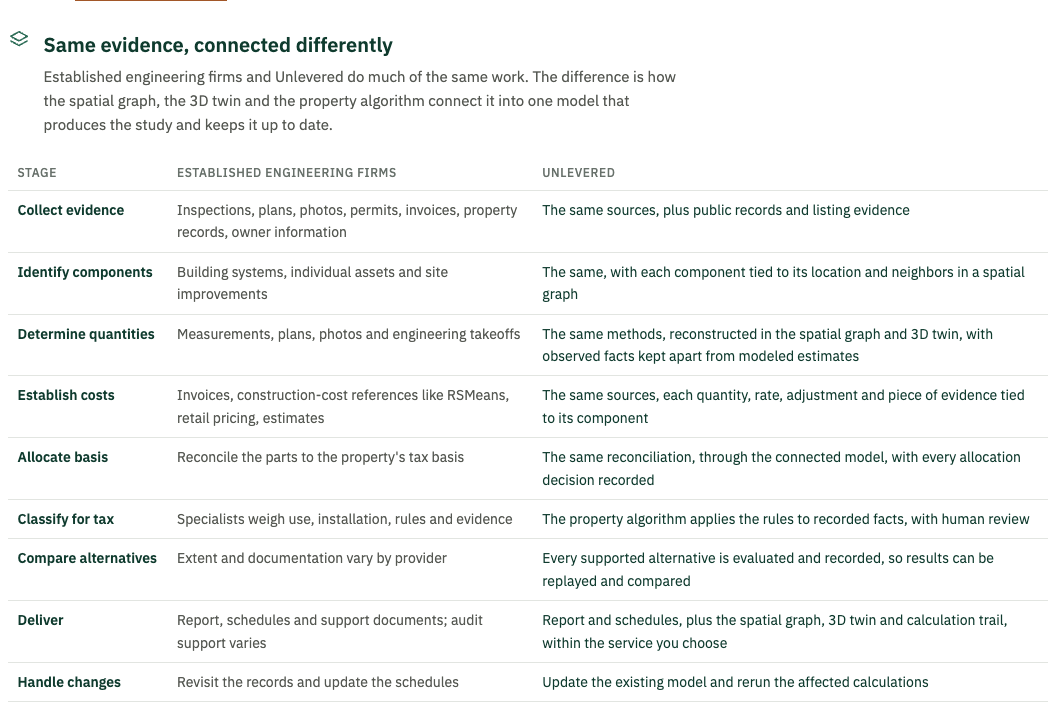
Unlevered calls its approach Geospatial Engineering for Cost Seg. It crawls permits, assessor records, the listing, photos and floor plans; categorizes every item; measures it; and rebuilds the house as a 3D digital twin. What cannot be seen, like wiring or plumbing in the walls, is modeled from how houses are built and reconciled against your inspection report.
The split that matters for an audit: AI collects and verifies the data, but the math is deterministic, a database query over every recorded fact. Run it twice and you get the same answer to the cent. "If you're called into an audit, 'AI said so' isn't an answer," Bola says. Every line shows its source, quantity, rate, classification and rule, and in an audit the full calculation workbook goes to your CPA and the examiner.
What to send to start a study
Required:
- Your name, the address, the purchase price and the date the house was ready for guests
- Your listing link: Airbnb or VRBO for a short-term rental, Zillow or other rental evidence for a long-term one
Improves the deduction and defensibility:
- Inspection report (the panel, water heater, roof and crawlspace)
- Receipts, furniture included
- Recent photos, especially after a remodel
- Closing statement
- Appraisal
Unlevered signs the study; your CPA files the return. You can share the study with your CPA directly in the portal.
The one question to ask any provider
"Ask them to show you the calculation," Bola says. If a provider cannot trace a number back to its source, neither can the IRS.
Frequently asked questions
What is a cost segregation study for a short-term rental?
It breaks a rental into land and parts that depreciate over 5, 15 and 39 years, so the faster parts can be deducted sooner. With 100% bonus depreciation, most of the 5- and 15-year parts come off federal taxes in year one.
Does the short-term rental loophole still work in 2026?
Yes. If the average guest stay is 7 days or less and you materially participate, losses can offset W-2 income, up to $512,000 for joint filers in 2026, with the rest carried forward.
Does California allow bonus depreciation?
No. California does not follow federal bonus depreciation, but a study still raises your yearly state deduction because parts are depreciated over 5 or 15 years instead of 39.
How much does a cost segregation study cost?
Unlevered charges a flat $2,500 for its Basic Study or $5,000 for 3D GeoEng + Audit on a single-unit property, and from $7,500 per multi-unit property. Bola's rule of thumb is that a study pays off at $350,000 or more of building basis.
Is landscaping 15-year property?
Planted landscaping, irrigation, fences, paths, pools, decks and wells are generally 15-year land improvements. Native trees, soil and permanent grading are part of the land and are not depreciable.
When do I need to buy to get the deduction this year?
The house must be ready for guests by December 31. Aim to close at least 30 days before year-end and be hosting with two weeks to spare.
Can I do cost segregation on a rental I bought years ago?
Yes, through a lookback study and a change in accounting method filed with this year's return. No amended returns are needed. Bonus depreciation depends on when you acquired the property.
Thinking about buying a vacation rental in Sonoma County and want to run the numbers, tax angle included, before you write an offer? Email me directly at david@bruingtonhargreaves.com. If you already own one, see what a cost segregation study finds on your house.
About the Author
David Hargreaves is the co-founder of BruingtonHargreaves, one of Sonoma County's top-ranked real estate teams and part of W Real Estate. Originally from the UK and an Oxford University graduate, David built and ran a digital marketing agency serving Google, Facebook, and other major brands before becoming one of Sonoma County's top agents within three years of entering real estate.
Today he and business partner Jonathan Bruington have sold more than $232 million in Sonoma County homes over the past three years, earning recognition as a RealTrends No. 2 team in the county and the No. 1 team in Healdsburg. David specialises in helping Bay Area buyers and sellers with luxury properties and vacation rentals across Healdsburg, Windsor, Santa Rosa, and the Russian River communities, and leads one of the area's most active Healdsburg real estate teams.
He lives in Sonoma County with his wife Nancy and is happiest cycling the back roads, exploring local wineries, or behind a camera. Have a question about buying, selling, or building in Wine Country? Book a free call.
About the Expert
Bola Akinsanya is the founder of Unlevered, a geospatial cost segregation platform. In over 11.5 years at Airbnb, she held executive roles across the company: she ran community and business operations for Homes, one of its first digital marketing campaigns and a taxonomy team, opened its office in India, led global teams, helped launch Experiences and ran go-to-market for guest services. She hosts at The Sea Ranch and on Cape Cod. [Headshot to follow.]
Unlevered Inc. is not a CPA firm and does not provide tax advice. BruingtonHargreaves is not a tax advisor. Readers should confirm their own situation with their tax advisor.