
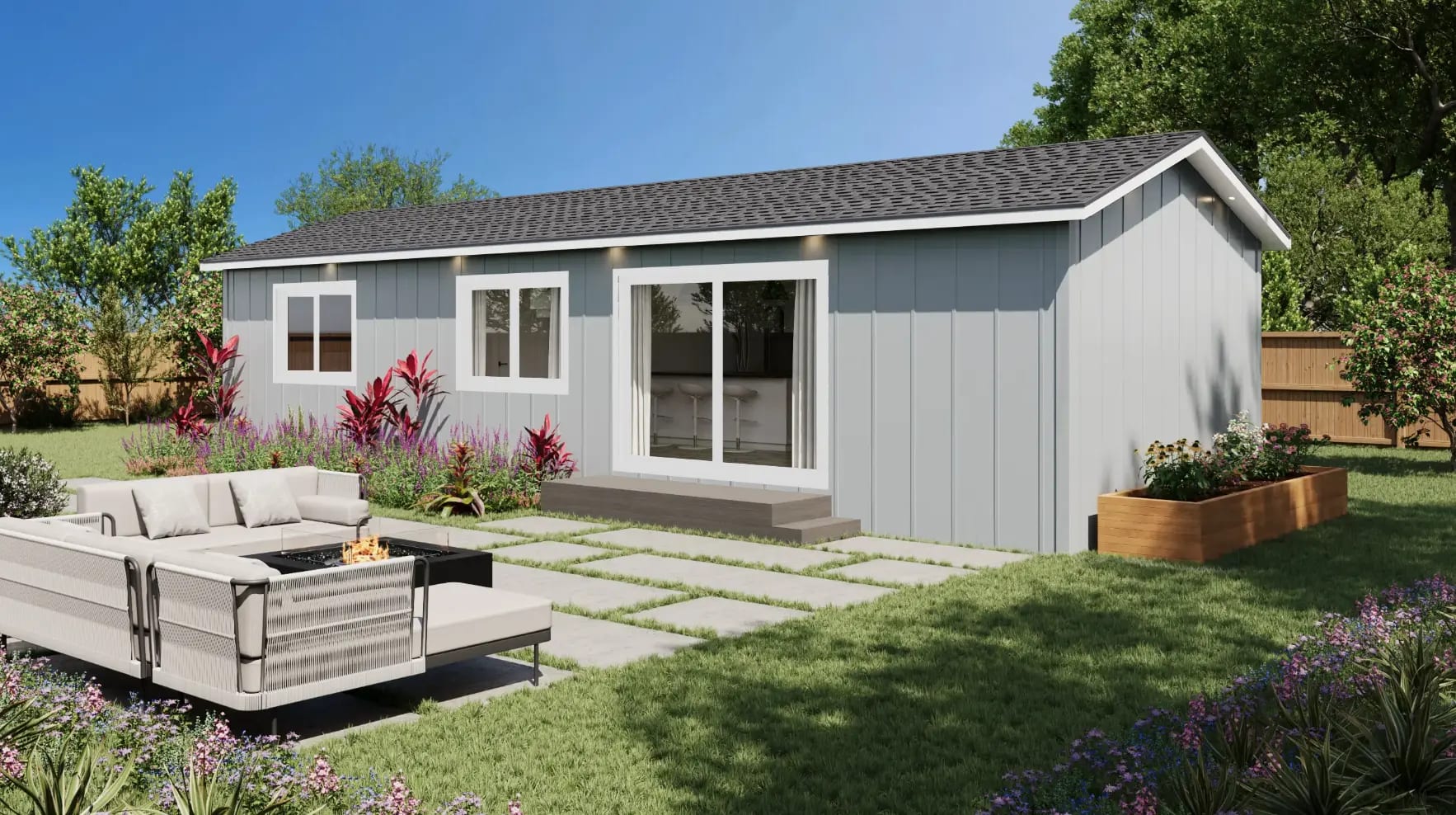
If you own an unpermitted backyard unit in Sonoma County, the county's answer may have just gone from "tear it down" to "let's get it permitted." Under Ordinance 6544, which took effect at the start of 2026, Permit Sonoma will not deny a permit for an ADU or junior ADU built before January 1, 2020, unless the building is substandard. The same ordinance also lifts the ADU cap on multifamily lots, and it sits alongside a fee line and a rental rule that shape every ADU decision in the county.
Here are the four Sonoma County ADU rules that matter most, what each one means in practice, and how they play out in Healdsburg, Windsor, Santa Rosa, and the City of Sonoma.
The four changes at a glance
- Pre-2020 amnesty: unpermitted ADUs and JADUs built before January 1, 2020 can be legalized under health and safety standards, not new-construction rules.
- Multifamily density: a lot with an existing multifamily building can add up to 8 detached ADUs, up from 2.
- The 750 square foot fee line: in unincorporated Sonoma County, ADUs at or under 750 square feet of interior living space skip park and traffic impact fees.
- No vacation rentals: ADUs and JADUs must be rented for 30 days or longer, but owner occupancy is no longer required for an ADU, or for a JADU with its own bathroom.
ADU, JADU, or guest house: why the label matters
An ADU (accessory dwelling unit) is a second home on the same lot with its own kitchen and bathroom. A JADU (junior ADU) is a smaller unit of up to 500 square feet carved out of the main house. A guest house has no kitchen. Those definitions sound technical, but they decide which fees you pay, who can live there, and whether the space can ever be part of a vacation rental.
Rule 1: The pre-2020 amnesty for unpermitted units
Picture a converted garage with a window unit humming through the summer, or a studio out back with its own porch light. Someone has lived there for years, and no one ever pulled a permit. Until recently, that was a liability. If the county found it, the owner faced costly upgrades or demolition.
The right to legalize these units comes from AB 2533, a state law that took effect on January 1, 2025. Ordinance 6544 brought Sonoma County's zoning code in line with it. For a unit built before January 1, 2020, the setbacks, size limits, and height rules that would sink a new project don't apply. Inspectors look at health and safety instead: sound structure, working plumbing and wiring, weather protection, safe exits, and fire safety.
What about energy codes? Several agencies applying AB 2533, including the City of El Cerrito, say the local ADU ordinance, the California Energy Code, and CALGreen don't apply to these older units. That can remove some of the most expensive upgrades from the budget. But not every agency reads the law the same way, and Permit Sonoma's own page doesn't spell out the energy question. Expect to be judged on health and safety, and confirm the energy piece with your planning department before you budget around it.
How the process works
First, apply for a building permit and tell the county you're using the pre-2020 pathway. Second, prove the unit existed before 2020 with old records, escrow papers, past disclosures, or insurance documents. Third, a county inspector visits. If they find problems, you aren't penalized for them; they recommend fixes, and you make the health and safety corrections.
If you're nervous about putting the unit on the county's radar, hire a licensed contractor for a confidential inspection first. You'll know what you're dealing with before anyone from the county walks through the door.
The fees are friendlier too. Pre-2020 units pay no impact fees or utility connection charges unless new utility work is needed to fix a safety issue. You still pay the normal review, inspection, and permit fees.
How the cities handle it
The county ordinance covers only inland, unincorporated Sonoma County. Because AB 2533 is state law, the pre-2020 pathway applies in every city too; what changes is how each city runs the process.
Santa Rosa has its own deferral program that can pause enforcement for up to five years on units built before March 2020, after a habitability inspection. For Healdsburg, Windsor, and the City of Sonoma, I couldn't find city-specific guidance at the time of writing. The right still exists under state law, so call the planning department and ask how they're processing these applications.
What legalizing means for taxes and resale
Legalizing a unit puts it on the county's books, and the assessor adds value for it. The impact is smaller than most owners fear. In California, only the new construction gets its own assessed value; the rest of your property keeps its existing tax base. With property taxes running around 1.15% across Sonoma County, that is roughly the rate you'd pay on the unit's added value. For illustration, if the assessor added $150,000 for the unit, your bill would rise by about $1,725 a year.
On the sales side, the math flips in your favor. A permitted unit can be marketed and valued as a real second home. An unpermitted one is a question mark that buyers and lenders tend to discount, and your insurance may not cover a fire that starts in an unpermitted unit.
Rule 2: Up to eight ADUs on multifamily lots
For years, small apartment owners hit the same ceiling: 2 backyard units, no matter how much unused land sat behind the building. Under SB 1211, a lot with an existing multifamily building can now add up to eight detached ADUs. It's one of the most underrated changes in California housing law right now.
The condition: you can't add more new detached ADUs than the number of units already on the lot. In practice, that looks like this:
- Duplex: up to 2 detached ADUs
- Triplex: up to 3 detached ADUs
- Fourplex: up to 4 detached ADUs
- 8 or more units: up to 8 detached ADUs
Sonoma County's staff report on Ordinance 6544 confirms the county raised its own multifamily limit to match state law. Some older county web pages still show the old ceiling of 2, so don't be thrown if you come across it.
That's before you look inside the building. Owners can still convert unused space, such as storage rooms or basements, into additional units, for up to about 25% of the existing unit count. Take a 4-unit building on a deep lot with a strip of surface parking out back. Under the old rules, the owner stopped at 2 detached units. Now the same lot can support up to 4, plus at least 1 conversion inside the building.
Parking is what makes these projects pencil out. Local governments can no longer require you to replace surface parking spaces you build over. On many older multifamily properties, the parking lot may be the most valuable land you own.
Two catches. The higher cap applies only to existing multifamily buildings; a brand-new apartment project is still limited to 2 detached ADUs. And in the unincorporated county, many rural properties rely on wells and septic. Check your septic system and water supply capacity before you start sketching floor plans, because either one can stop a project cold.
Rule 3: The 750 square foot fee line
Most people size an ADU by asking how much backyard they have. In Sonoma County, the smarter first question is where the fee bill starts.
In unincorporated Sonoma County, impact fees apply once an ADU has more than 750 square feet of interior living space. Stay at or under that line and you skip park and traffic impact fees. In the Sonoma County Fire District and the Sonoma Valley Fire District, the same line decides whether you pay fire impact fees.
Above 750 square feet, fees are charged in proportion to the unit's size compared with the main house. So two backyard cottages that look almost identical from the street can carry very different costs: one designed right at 750 square feet owes none of these fees, while one a few feet bigger owes a whole set. Sit down with a designer early and decide whether those extra feet are worth it.
A few more lines to watch:
- School district fees can apply once an ADU goes over 500 square feet, a separate threshold from the county's 750.
- Converting existing space into an ADU or JADU on a single-family lot doesn't require a separate utility connection or a related connection fee.
- New detached units, and conversions on multifamily lots, may still need their own utility connection and pay connection or capacity charges.
- JADUs are exempt from impact fees altogether.
The cities draw their own fee lines, and some are more generous than the county. Based on our research, Healdsburg exempts ADUs up to 850 square feet, Windsor doesn't charge town impact fees on ADUs at all, and Santa Rosa uses tiered fees above 750 square feet. Fee schedules change, so confirm current numbers with your city before you lock in a design. If you're weighing an ADU against a larger project, our breakdown of what it costs to build in Sonoma County gives you current per-square-foot benchmarks.
Rule 4: No vacation rentals, but no owner-occupancy trap either
String lights over a backyard cottage and a fresh set of weekend guests every Friday: that's one of the first uses owners imagine for an ADU. In unincorporated Sonoma County, it's off the table. ADUs and JADUs can't be used as vacation rentals or any other short-term rental. Any rental has to run 30 days or longer.
State law lets local governments set that 30-day minimum, and from what we've found, Healdsburg, Windsor, Santa Rosa, and the City of Sonoma apply the same rule to ADUs.
The guest house is where this gets interesting. Because a guest house has no kitchen, the county says it may be used as part of a permitted vacation rental of the main home in certain circumstances. It can be part of the rental setup, but it isn't treated as a separate vacation rental on its own.
For investors, the configuration matters even more. Under current Sonoma County rental rules, a property with a permitted JADU is ineligible for a vacation rental permit altogether. With a detached ADU, the main house can still qualify, but the ADU can't be part of the permit. If short-term rental income is part of your plan, an ADU and a guest house are two very different decisions.
Now the good news. AB 976 permanently bars local governments from requiring an owner to live on a property with an ADU, so you can build and permit one whether you live in the main house or not. The new county ordinance goes further for JADUs: owner occupancy is no longer required for a JADU with its own bathroom. A JADU that shares a bathroom with the main house still carries the owner-occupancy requirement.
That leaves an ADU as a home for family, a long-term rental, or your own future downsize, each with a clear set of rules.
Have an unpermitted unit, a small multifamily property, or a sale coming up? Email me at david@bruingtonhargreaves.com and I'll walk you through what legalizing or adding a unit could do for your property's value before you make any moves.
About the Author
David Hargreaves is the co-founder of BruingtonHargreaves, one of Sonoma County's top-ranked real estate teams and part of W Real Estate. Originally from the UK and an Oxford University graduate, David built and ran a digital marketing agency serving Google, Facebook, and other major brands before becoming one of Sonoma County's top agents within three years of entering real estate.
Today he and business partner Jonathan Bruington have sold more than $250 million in Sonoma County homes over the past three years, earning recognition as a RealTrends No. 2 team in the county and the No. 1 team in Healdsburg. David specialises in helping Bay Area buyers and sellers with luxury properties and vacation rentals across Healdsburg, Windsor, Santa Rosa, and the Russian River communities.
He lives in Sonoma County with his wife Nancy and is happiest cycling the back roads, exploring local wineries, or behind a camera. Have a question about buying, selling, or building in Wine Country? Book a free call.